
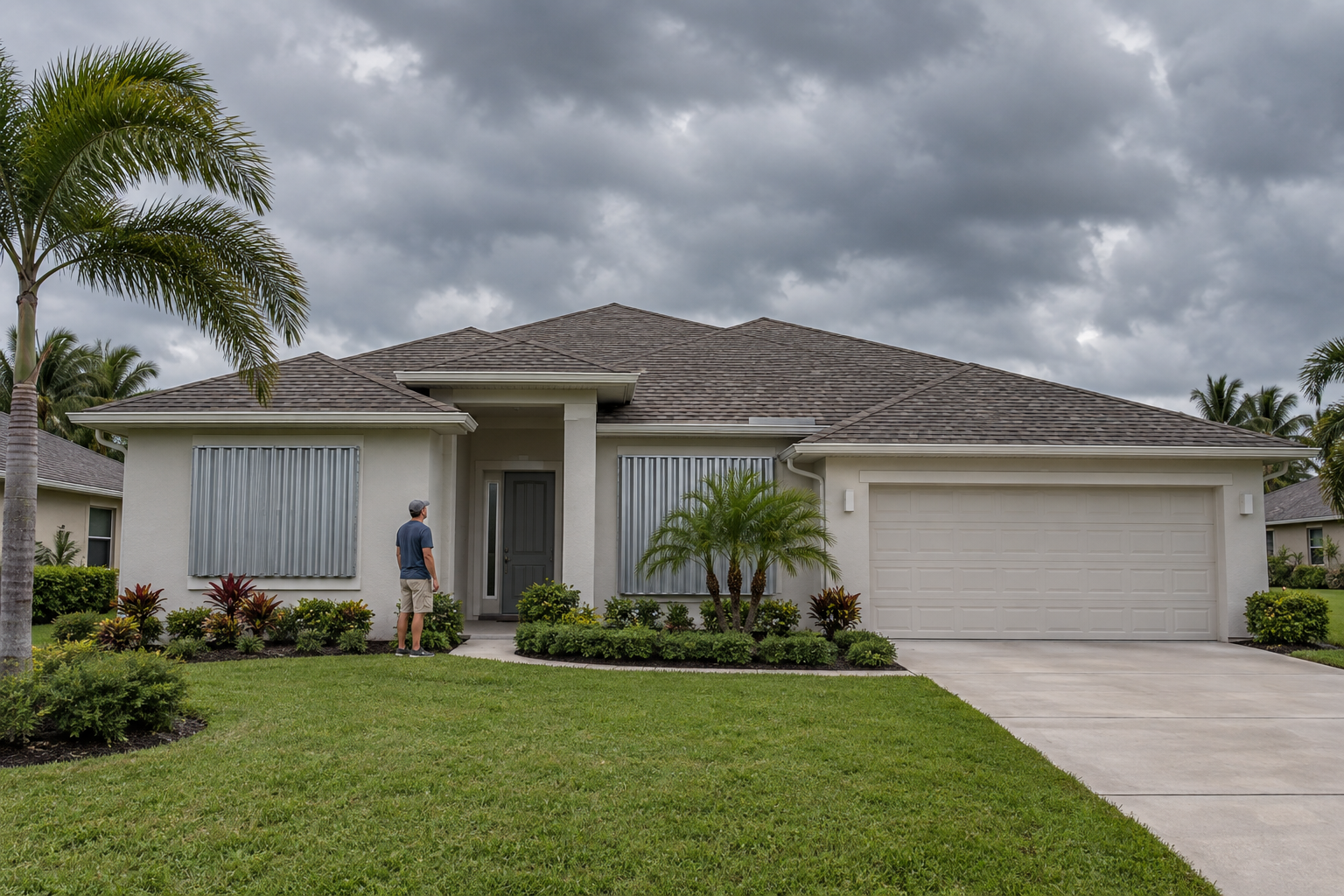
Hurricanes can threaten much more than the coastline. Strong winds, heavy rain, flooding, tornadoes and long power outages can affect households far inland, sometimes well after the center of the storm has moved away.
Preparing well does not mean buying every emergency product you can find or trying to protect your house at the last minute. It means knowing your risk, deciding where your household will go if an evacuation is ordered, strengthening the home where practical and completing the most important tasks before conditions become dangerous.
Quick Answer
Prepare your home for a hurricane in two stages. Before hurricane season, learn your evacuation zone, review insurance, make a household plan, gather supplies and complete any structural improvements. When a storm threatens, follow official forecasts, secure outdoor items, protect openings, charge devices, prepare for power and water disruptions and leave promptly if local officials order an evacuation.
Safety First
People come before property. Never remain in an unsafe home to protect belongings, and never delay an evacuation while finishing preparations. Stop outdoor work before tropical-storm-force winds arrive. Follow local emergency management, utility and public-safety instructions even when they differ from a general checklist.
Start With Your Actual Hurricane Risk
A useful hurricane plan begins with the risks around your home, not with a generic shopping list. Coastal households may face storm surge and mandatory evacuation. Inland households may still face destructive wind, freshwater flooding, tornadoes, fallen trees and extended outages.
Find out whether your home is in a hurricane evacuation zone by checking with your local government or emergency management office. The National Weather Service recommends doing this before a storm threatens. The National Hurricane Center’s storm-surge maps can help show broad areas of risk, but local officials determine evacuation zones and issue evacuation orders.
Also consider whether the building itself is a safe place to shelter. Manufactured homes, homes in low-lying areas, buildings surrounded by large trees and homes with known structural problems may require an earlier move to safer shelter. A household member who depends on powered medical equipment, refrigerated medicine or mobility assistance may also need more time and a more specific destination.
If you are starting from the beginning, use Ready Chateau’s Start With the Basics guide to evaluate your people, risks, current supplies and most important gaps before you spend money.
Know the Difference Between a Watch and a Warning
A hurricane watch means hurricane conditions are possible in the specified area. A hurricane warning means hurricane conditions are expected. Watches are generally issued about 48 hours before tropical-storm-force winds are expected, while warnings are generally issued about 36 hours before those winds arrive.
Those times do not create a safe last-minute work window. Roads, stores and fuel stations may become crowded earlier, and outdoor preparation becomes dangerous as winds increase. Use the National Hurricane Center forecast and local instructions to decide when your household must finish preparing or leave.
Prepare Before Hurricane Season
The best time to protect a home is when no storm is approaching. Seasonal preparation gives you time to hire qualified help, compare options and correct problems without rushing.
Review the home itself
Inspect the roof, exterior doors, garage door, shutters and drainage around the property. Look for loose materials, damaged seals, clogged gutters, weak tree limbs and outdoor items that could become windborne debris.
Some improvements require a qualified contractor and may need permits or inspections. Depending on the home and local building requirements, these may include strengthening roof-to-wall connections, improving roof-deck protection, upgrading a garage door or installing tested shutters or impact-rated openings. These are planned resilience projects—not jobs to begin when a hurricane warning has already been issued.
Prepare window and door protection in advance. If you use removable shutters or properly sized plywood panels, label them and confirm the hardware is complete. Do not rely on tape to protect windows from hurricane debris.
Review insurance and document the property
Read your homeowners or renters policy before hurricane season and ask the insurer what is and is not covered. Most homeowners and renters insurance does not cover flood damage, according to the National Flood Insurance Program. Flood coverage is separate, and policies may have waiting periods.
Create a home inventory with photos or video. Record major appliances, equipment and valuable belongings, and keep policy numbers and contact information somewhere you can access if the home is damaged. Store a protected digital copy as well as any paper documents you plan to take during an evacuation.
Make an evacuation plan
Choose more than one destination and route. Your first choice might be a friend’s home outside the risk area, a hotel or a public shelter. Confirm whether the destination accepts pets and whether anyone in the household needs accessible transportation, medical support or additional time.
Decide who will drive, what vehicle you will use and what would trigger an early departure. Keep the vehicle maintained and avoid letting the fuel level become critically low during hurricane season.
Build household supplies gradually
A practical emergency supply does not need to appear overnight. Start with water, familiar shelf-stable food, medicines, lighting, communication, hygiene supplies and the needs of children, older adults and pets. Ready Chateau’s Complete Home Emergency Preparedness Checklist can help you review the household one category at a time.
A 72-hour emergency kit is a useful starting point, but a hurricane may interrupt roads, electricity and water for longer than three days. Add supplies according to local guidance, household needs and storage space. Review 15 Things People Forget in Their Emergency Kit for commonly missed items such as spare glasses, printed contacts, pet supplies and charging cables.
Make a power-outage plan
Decide what truly needs electricity. Refrigeration, communications, medical equipment, lighting and a few comfort items may matter more than trying to run the entire home.
Review What to Do When the Power Goes Out before storm season. If you are choosing backup equipment, Portable Power Station vs. Generator explains the practical differences between battery storage and fuel-powered generation without assuming one option fits every household.
When a Hurricane Is Forecast
As the forecast becomes clearer, shift from long-term improvements to safe, time-limited actions. Do not climb onto a roof, remove large branches or begin structural work while a storm is approaching.
Follow official information
Monitor the National Hurricane Center, your local National Weather Service office and local emergency management. Forecast tracks and impacts can change. The center line of a forecast cone is not the only place at risk, and hazards can extend far from the storm’s center.
Turn on emergency alerts and identify at least one battery-powered way to receive information. Write down important contacts in case a phone is lost, damaged or unable to connect.
Secure the exterior
Bring in or firmly secure outdoor furniture, grills, bicycles, decorations, tools, garbage containers and loose building materials. Move propane cylinders only as permitted by their safety instructions, and never store them inside the living area.
Close and secure exterior doors, garage doors and shutters. Install prepared panels while conditions are still safe. Move vehicles into a garage or another protected location if appropriate, but do not block your evacuation route.
Clear ordinary debris from accessible drains and gutters only if the work can be done safely from the ground. Leave roof work, large tree work and structural repairs to qualified professionals and a safer time.
Protect documents and belongings
Place identification, insurance information, medical records, prescriptions and essential financial documents in a waterproof container that can leave with you. Move irreplaceable items and vulnerable supplies above expected flood levels when possible.
Take current photos of the exterior and interior before the storm. Back them up somewhere outside the home so they remain available if a device is lost.
Prepare food and water
Store drinking water before a disruption occurs. How Much Water Should You Store for an Emergency? provides a practical starting calculation, while The Right Way to Store Emergency Water at Home covers containers, location and rotation.
Place appliance thermometers in the refrigerator and freezer. Freeze water containers and gel packs, group frozen food together and have coolers ready. Keep food and bottled water above areas likely to flood.
During an outage, keep refrigerator and freezer doors closed. The FDA says an unopened refrigerator keeps food cold for about four hours. A full freezer can hold a safe temperature for about 48 hours, or about 24 hours when half full, if the door remains closed. Temperature—not smell or appearance—should guide food-safety decisions.
Charge and test essential equipment
Charge phones, rechargeable lights, power banks, portable power stations and medical-device backups. Test flashlights, radios and carbon-monoxide alarms. Replace weak batteries and place equipment where it can be found in the dark.
Fill the vehicle’s fuel tank or charge an electric vehicle early enough to avoid a last-minute delay. If you own a generator, check fuel, oil, cords and operating instructions before the weather deteriorates. Do not perform unfamiliar repairs during an emergency.
Generator Safety Cannot Be Improvised
A portable generator must operate outdoors, at least 20 feet from the home and away from doors, windows and vents. Never run one in a house, garage, carport, shed or other enclosed space. Use a working battery-operated or battery-backup carbon-monoxide alarm inside the home.
Never try to power house wiring by plugging a generator into a wall outlet. Use only the connection method, cords and equipment appropriate for your setup. Ready Chateau’s Portable Generator Safety guide explains placement, carbon-monoxide, fire and electrical hazards in more detail.
Decide Whether to Evacuate or Shelter
You do not need to guess after an order is issued. If local officials tell your zone to evacuate, leave. A well-built home cannot make storm surge safe, and remaining behind to protect property can put both your household and emergency responders at risk.
If you evacuate
Leave early enough to avoid worsening weather and road conditions. Follow official routes even if another route appears shorter.
Take your emergency kit, medicines, identification, insurance information, cash, phones, chargers, essential clothing and supplies for children and pets. Unplug appliances if time allows. Turn off utilities only when local officials or the utility instruct you to do so, or when you already know the correct household procedure.
Tell an out-of-area contact where you are going and when you expect to arrive. Never drive through floodwater. A road hidden by water may be washed out, and moving water can sweep a vehicle away.
If you shelter at home
Keep your emergency kit, shoes, lights, phone and weather radio with you. Stay indoors and away from windows, preferably in an interior room on a lower level that is not at risk of flooding.
Continue monitoring official alerts. Do not go outside when conditions suddenly become calm; the eye of a hurricane can create a temporary lull before dangerous winds return from the opposite direction.
Be ready to move if the home becomes unsafe or officials change their instructions. If water begins entering the building, move to a higher level but avoid becoming trapped in an enclosed attic without an escape route.
After the Hurricane
The end of strong wind does not mean the danger is over. Floodwater, downed electrical lines, unstable trees, damaged structures, contaminated water, spoiled food and carbon monoxide can cause injuries after the storm.
Wait for official guidance before returning to an evacuated area. Do not enter a damaged building if floodwater remains around it, you smell gas or authorities have not said it is safe. Keep children and pets away from debris and standing water.
Photograph damage before cleanup when it is safe to do so. Contact the insurer and follow its documentation instructions. Use protective clothing during cleanup, and obtain professional help for electrical damage, structural damage, large trees, mold or suspected gas leaks.
Continue to run generators outdoors and away from openings. Follow public-health notices about drinking water, and discard food that has been exposed to floodwater or held outside safe temperatures.
Your Hurricane Home Preparation Checklist
Before hurricane season:
- Know your evacuation zone and local alert sources.
- Choose destinations, routes and pet arrangements.
- Review insurance and create a home inventory.
- Complete structural improvements and prepare shutters or panels.
- Build household supplies and plan for essential power needs.
- Maintain the vehicle and emergency equipment.
When a storm threatens:
- Follow official forecasts and local instructions.
- Finish preparations before tropical-storm-force winds arrive.
- Secure outdoor items and protect openings.
- Charge devices and test lights, radios and carbon-monoxide alarms.
- Prepare food, water, refrigeration and medicines.
- Leave promptly if your zone is ordered to evacuate.
After the storm:
- Wait for official guidance before returning.
- Avoid floodwater, downed lines and unstable structures.
- Document damage before cleanup when safe.
- Continue generator, food and water safety precautions.
A hurricane plan works best when the major decisions are made before the forecast becomes urgent. Start with the people in your household, the risks where you live and the supplies you already have. Then close the most important gaps one at a time. Calm preparation completed early is more useful than hurried preparation completed in dangerous conditions.
Authoritative Sources
- National Weather Service — Hurricane planning and watches and warnings
- National Hurricane Center — Storm surge and evacuation guidance
- CDC — Preparing for hurricanes
- CDC — Carbon-monoxide prevention
- FEMA — Preparing the home for hurricane season
- National Flood Insurance Program — Buying flood insurance
- FDA — Food and water safety during power outages and floods