You can spend a lot on emergency gear and still find yourself looking for a working flashlight when the lights go out. Before ordering anything else, take a look at what you already have and what your household would actually need during an outage or evacuation.
Some purchases can wait. Others may never earn their space in your closet. Here are six we'd question before spending the money, along with the situations where they might be worth having.
A giant survival kit chosen by the piece count
A bag advertised as having hundreds of pieces can sound reassuring. But the number doesn't tell you whether it has enough useful supplies for your household. Open the contents list. Look at the food and water quantities, the lights and batteries, and what you'd still have to add for medicines, children or pets.
A ready-made kit can be a convenient starting point if the contents suit you. It isn't automatically better than supplies gathered in a bag or covered bin you already own. And a kit for leaving home needs to be manageable for the person carrying it.
Use the Red Cross supply list to check the essentials, then make it personal. Our 72-hour emergency kit guide can help you put them together. Spend on missing supplies before paying for a bigger collection of things you won't use.
A big food bucket before you've tried the food
Long-life emergency meals have a place, especially when you need compact storage or food for an evacuation. You don't need to start with a large bucket of unfamiliar meals, though.
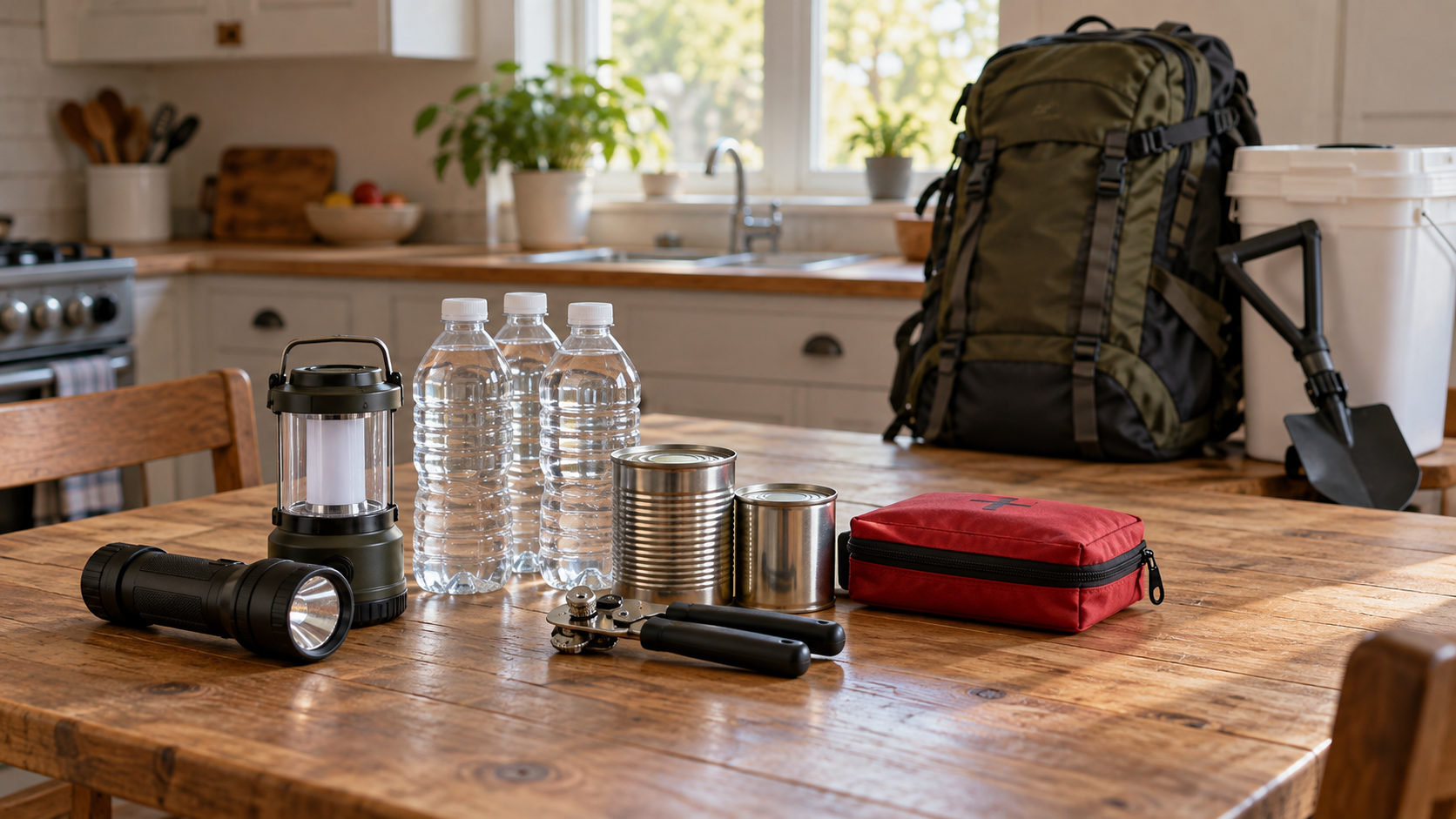
Familiar shelf-stable food is a reasonable first step: canned beans or fish, fruit, crackers and other foods your household already eats. Choose around allergies and dietary needs, and include options that need no cooking. Keep a working manual can opener with the supplies if the cans need one.
Before buying a bulk meal package, check how many people it will feed, its calories and ingredients, and how much water and cooking it requires. Try a small amount first. A cupboard of food everyone will eat is more useful than a bucket that stays unopened because nobody likes what's inside.
Our guide to building an emergency food supply without wasting money explains how to build up and rotate ordinary groceries.
A filter straw instead of stored drinking water
A portable filter may be useful for travel, hiking or a carefully planned backup. It shouldn't be your entire home water plan. You still need water to put through it, and you need a treatment method suited to what's in that water.
The CDC's water-treatment guidance explains that portable filters don't remove every kind of germ. Don't assume an ordinary camping filter makes floodwater or chemically contaminated water safe. Follow local drinking-water notices.
For home preparation, start with water you can use straight away. The CDC recommends at least one gallon per person per day for three days, and trying to store a two-week supply if possible. Allow more for pets, hot weather and individual needs. Choose a filter later for a specific source and problem, rather than letting a small gadget stand in for that stored supply.
Our water-storage container guide can help you choose sizes your household can lift and store.
Backup power bigger than the job
A large power station or generator can be worthwhile when it supports something important. It may be unnecessary if your immediate concern is charging a phone and having light in a few rooms. Suitable charged power banks and battery-powered lights may cover those smaller jobs.
Write down what must run and for how long before choosing equipment. Refrigeration, a well pump or heating equipment can change the decision considerably. For a power station, check both what it can power and how long its stored energy will last, plus how you'll recharge it during an extended outage.
A fuel-burning portable generator also needs safe outdoor space, fuel and maintenance. The CPSC says to operate it outdoors at least 20 feet from homes, with exhaust facing away. Never use one inside a home or garage, even with doors open. If you can't provide safe placement, it isn't the right solution for that location.
If someone depends on powered medical equipment, work with their care team and equipment supplier on a device-specific outage plan. A general buying guide can't establish that a battery is suitable. Our power station versus generator guide can help with the household comparison once you know the job.
If backup power fills a real gap, our generator picks and portable power station picks compare options for different household needs.
Survival tools for jobs you don't expect to do
A hatchet, folding shovel and elaborate survival multitool might suit camping or a particular evacuation plan. They don't become household essentials just because they're sold together in an emergency bundle.
Think about the ordinary tasks you'd actually face. Could you open your food, find a light, keep your phone charged and reach your supplies? A familiar can opener and basic tools you already know how to use may fill the gaps. A compact multitool can be handy, but you don't need to buy several versions of the same tool.
Keep useful backups where a second one serves a purpose, such as another flashlight by the bed or supplies in the car. Also distinguish overlapping gadgets from different capabilities: an ordinary AM/FM radio doesn't receive NOAA Weather Radio broadcasts unless it specifically includes that band. Check what you have before buying or discarding anything.
If weather alerts are the missing piece, our NOAA weather radio guide explains the features and compares our picks.
Candles bought as your outage lighting plan
Candles are a purchase we'd skip for emergency lighting. Battery-powered flashlights, headlamps and lanterns let you see without bringing an open flame into the room. The Red Cross recommends flashlights rather than candles during emergencies.
If you already own suitable lights, test them and put fresh batteries or charging cables where you can find them. You may need a replacement battery rather than a new lantern.
If you do need another light, our emergency lighting guide compares flashlights, headlamps and lanterns for different jobs.
Before your next purchase
Ask what problem the item solves, whether something you own already does the job, and whether you can store, maintain and use it safely. If those answers are vague, leave it on the shelf for now.
Keep the essentials covered: safe water, suitable food, medicines and first aid, sanitation, dependable light, ways to receive warnings, and clothing and shelter suited to the weather. Have a plan for leaving if home becomes unsafe. Buy what fills a real gap. You don't have to finish an imaginary shopping list to make useful progress today.