
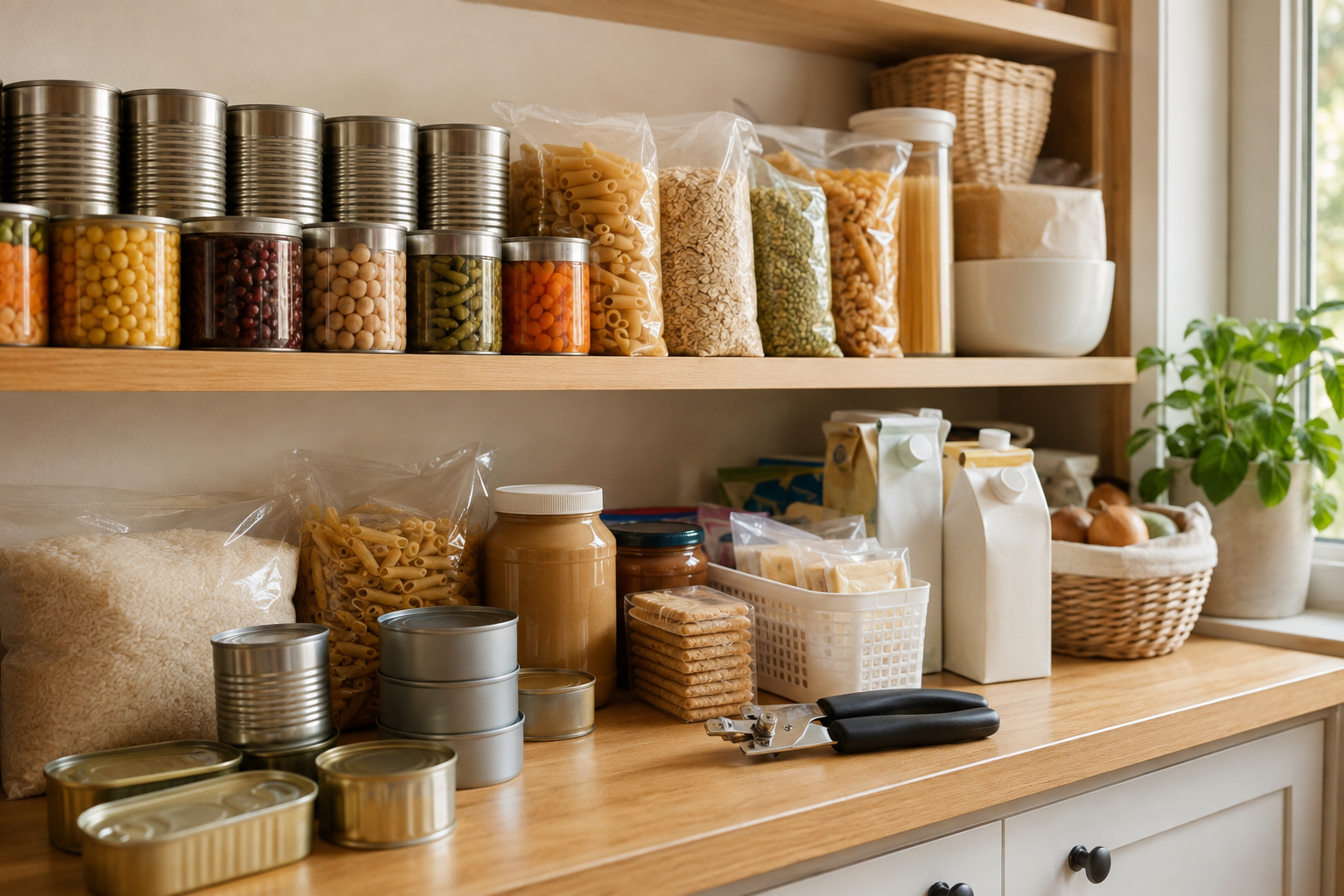
Emergency food does not have to mean expensive buckets of unfamiliar meals that sit untouched for years. For most households, the least wasteful place to begin is the food already in the pantry—and the meals people already know they will eat.
The goal is not to build the largest stockpile possible. It is to keep enough practical, shelf-stable food to get through a disruption without depending on refrigeration, daily shopping or elaborate cooking. If those foods can also become part of ordinary meals before their quality declines, preparedness stops being a separate expense and becomes part of normal household management.
Start With the Food You Already Eat
Before buying anything, look through your pantry, refrigerator and freezer. Write down the shelf-stable foods your household uses regularly. That list may include canned vegetables, fruit, beans, meat or fish; dry pasta, rice, oats or cereal; shelf-stable milk; nut or seed butter; crackers; soup; sauces; and familiar snacks.
This simple inventory does two things. It keeps you from buying food you already own, and it reveals which ordinary foods could serve two purposes: everyday meals now and emergency meals later. EPA guidance for reducing household food waste begins with the same basic practices—check what you already have, plan meals around it and buy only what you expect to use.
Do not start with foods your family rarely eats merely because they are labeled for emergencies. A long advertised shelf life does not create value if no one wants the food, cannot tolerate it or does not know how to prepare it.
Plan Meals, Not Just Ingredients
A shelf full of cans and boxes may look reassuring, but it is not yet a meal plan. Group foods into simple combinations your household could actually eat during a power outage or another disruption.
For example, a meal might combine:
- Canned chicken or beans with crackers and canned fruit
- Shelf-stable milk with cereal, oats or granola
- Canned soup with crackers or shelf-stable bread
- Pasta with jarred sauce and canned vegetables
- Tuna or another shelf-stable protein with crackers and fruit cups
These are only examples. Your best choices are the foods that fit your household’s tastes, dietary needs, culture and normal eating habits. The useful question is not simply, “How many cans do we own?” It is, “How many realistic meals can we make from what we have?”
Include Food That Requires No Cooking
Some emergencies interrupt power, fuel or safe water at the same time. Ready.gov recommends nonperishable foods and reminds households to include a manual can opener, utensils and any special dietary needs. FDA guidance also advises keeping a few days of ready-to-eat foods that do not require cooking or cooling.
Keep at least some food that can be opened and eaten as it is. Possibilities include canned fruit, ready-to-eat beans, canned meat or fish, nut or seed butter, crackers, dry cereal, nutrition bars, shelf-stable milk and commercially packaged snacks. Choose pull-top containers where useful, but keep a manual can opener with the supply even if most cans have tabs.
A few no-cook meals can take some pressure off when the power is out or cooking is not practical. They may be simple, but they should still include familiar foods everyone can eat safely. A mixture of protein, carbohydrates, fruit or vegetables and comfort foods will generally be more useful than a collection built around one type of food.
Build the Supply in Small, Useful Steps
You do not have to build your emergency pantry all at once. Start by adding one or two shelf-stable items to a normal grocery order. Once those items represent one complete household meal, build the next meal.
A practical sequence is:
- Inventory food already on hand.
- Identify several ordinary shelf-stable meals your household will eat.
- Buy the missing ingredients for one meal at a time.
- Add several no-cook meals for outages that limit cooking.
- Use older food in normal meals and replace only what the household actually used.
This approach spreads the cost across regular shopping trips and gives you a chance to learn what works. It also prevents a common mistake: buying a large quantity before discovering that the portions, preparation requirements or flavors are wrong for your household.
Buy the Right Package Size
Bulk packages are not automatically economical. They save money only when the food can be stored properly and used before it loses quality. During an outage, a large opened container may also create a new problem if the remainder requires refrigeration.
Think about how much your household could realistically finish once a package is opened, especially when the remainder would normally require refrigeration. Smaller containers sometimes cost more per ounce, but they may waste less when refrigeration is unavailable.
Before buying a case, test a single package in an ordinary meal. Confirm that everyone will eat it, that the portion is useful and that you have the equipment, water and energy needed to prepare it.
Pay Attention to Water and Cooking Requirements
Dry foods can be economical and compact, but they may require water, cooking time and fuel. Your emergency water supply must account for both drinking and food preparation. Rice, pasta, dried beans and dehydrated meals are less useful if your plan assumes unlimited water or a cooking method you cannot safely operate during an outage.
For every planned meal, ask:
- Does it require safe water?
- How much water will preparation and cleanup use?
- Does it require heating or extended cooking?
- Can we prepare it with equipment we already own and know how to use?
- What would we eat instead if cooking were unavailable?
A practical pantry will probably include both: economical dry staples for times when you can cook and ready-to-eat foods for times when you cannot. Our guide to cooking during a power outage will cover that subject, including the safety limits of different cooking methods.
Protect Special Household Needs
Start with the people and animals in your home. Consider food allergies, diabetes, swallowing difficulties, low-sodium requirements, infant feeding, pregnancy, religious or cultural needs and any other dietary restriction that cannot simply be suspended during an emergency.
Include familiar food for children and older adults, as well as pet food and any treats or supplements that are genuinely part of the animal’s routine. If someone relies on a medically necessary diet or specialized formula, discuss emergency substitutions and storage requirements with the appropriate clinician or manufacturer rather than improvising during a disruption.
Store Food Where It Will Last
FoodSafety.gov advises that canned and dried foods last best in a cool, dry, dark location and notes that specialty dehydrated emergency food is not required. Avoid locations exposed to heat, moisture, pests, household chemicals or possible floodwater. Do not store food above a stove, under a sink or in a hot garage simply because the space is convenient.
Keep packages off the floor when flooding is a realistic risk. Inspect cans and packages periodically. Discard cans that are bulging, leaking, rusted through or badly damaged, and discard food that may have contacted floodwater. Never taste questionable food to decide whether it is safe.
Dates Are Useful, but They Are Not All the Same
Except for infant formula, federal law generally does not require food product dating, and USDA explains that many dates indicate quality rather than safety. Terms such as “Best if Used By” usually describe when a product is expected to have its best flavor or quality.
You should still pay attention to package dates, but they are not all automatic throw-away dates. Follow any safety-related instructions on the package, use food before quality declines when practical and discard damaged, contaminated or suspicious products. USDA’s FoodKeeper resource provides storage guidance for hundreds of foods when a package date alone does not answer the question.
Use a Simple First-In, First-Out Habit
You do not need a detailed system to begin rotating emergency food. Start with one operating rule: place newer purchases behind older ones and use the older food first. Write the purchase month on a package if the printed date is hard to see.
Once or twice a year, take a few minutes to look through your emergency food and pull out anything you should use soon. Move those foods into the everyday pantry, use them in normal meals and replace only what you still want in the emergency supply. If an item repeatedly reaches the end of its useful life without being eaten, stop buying it. The problem is probably the choice of food, not the rotation schedule.
Common Ways Households Waste Money
- Buying a large emergency-food package before trying the meals
- Stocking foods no one normally eats
- Buying ingredients without identifying complete meals
- Ignoring water, cooking fuel or cleanup requirements
- Buying containers too large to finish without refrigeration
- Storing food in a hot, damp or pest-prone location
- Forgetting allergies, medications, infants or pets
- Treating a long shelf life as more important than usefulness
The least expensive emergency food is not necessarily the product with the lowest price per ounce. It is food that meets a real need, stores safely and gets eaten before it becomes waste.
A Practical Starter Exercise
Choose three shelf-stable meals your household already likes. For each meal, list every required item, including water, seasonings and a safe way to open or prepare the food. Add one no-cook alternative.
Then shop your pantry before shopping the store. Buy only the missing items. Keep the meals together on a written list—not necessarily on the same shelf—so anyone in the household can see what is available.
Once those meals are complete, repeat the process. This creates a supply that grows in useful increments instead of becoming an expensive collection of disconnected products.
A Useful Supply Is One You Can Actually Use
A practical emergency food supply should reduce stress, not create another maintenance burden. Build it from familiar meals. Include food that works without cooking. Match packages to your household. Store everything properly. Use older items and replace them through normal shopping.
Preparedness is not measured by the number of cans, buckets or years printed on a package. It is measured by whether your household has safe, usable food when normal routines stop—and whether the money spent today still provides value if the emergency never comes.