
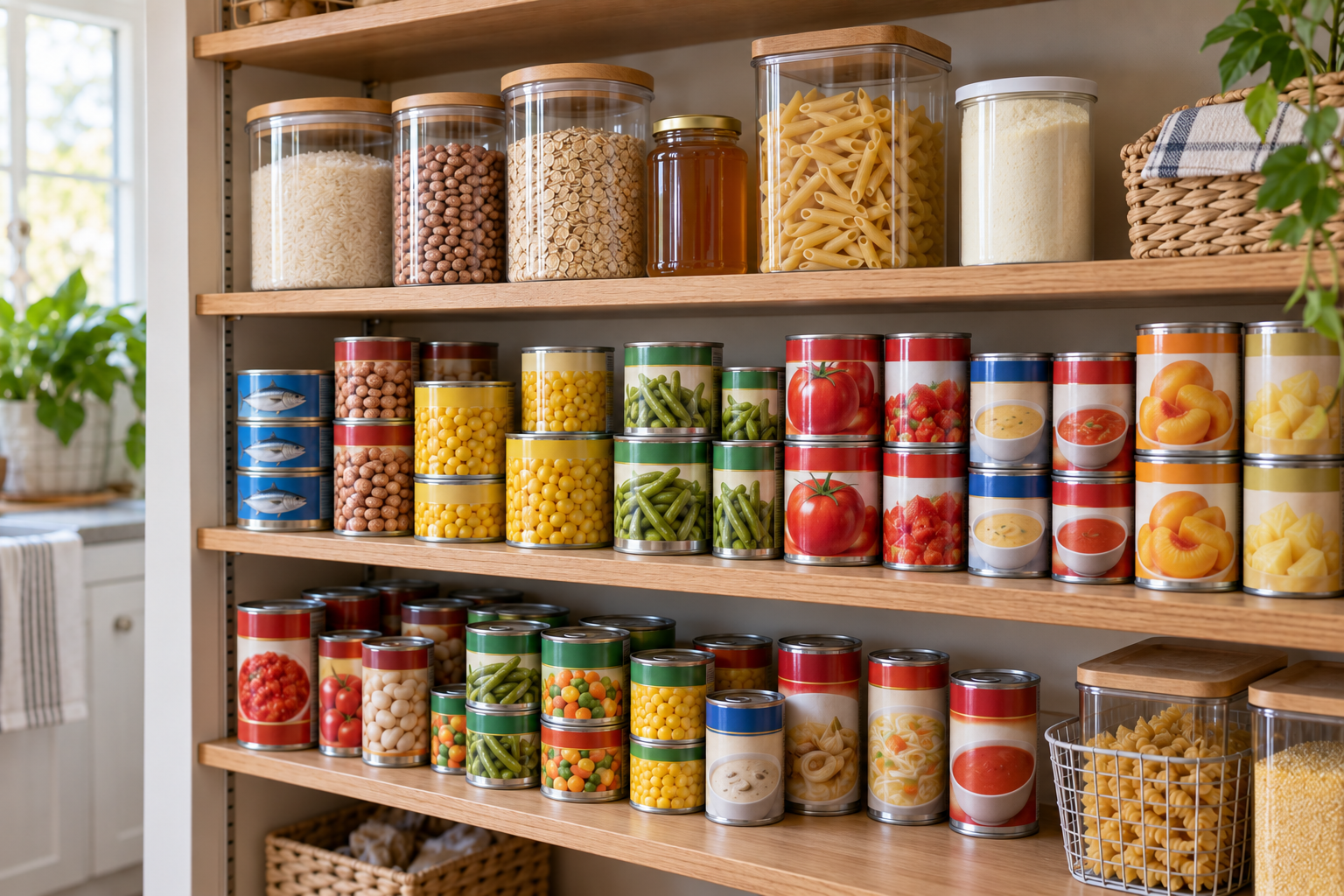
Some foods can remain usable for years—or even decades—when they are packaged and stored correctly. That does not mean every food with an impressive shelf-life claim belongs in your emergency supply.
The longest-lasting food may require more water, fuel or preparation than you can manage during an outage. Another food may not last as long, but it may be easier to eat, more familiar to your household and far more useful when the power is off.
The practical goal is not to find one food that lasts forever. It is to build a dependable mix of foods that store well, provide useful nutrition and can be prepared under the conditions you are actually planning for.
Quick Answer
Properly packaged white rice and dried beans are among the longest-lasting practical staples for most households. Granulated sugar and honey can remain safe for an exceptionally long time, although they are ingredients rather than complete meals. Commercial freeze-dried foods may also carry very long shelf-life claims, but the actual life depends on the product, packaging and storage conditions.
Nonfat dry milk does not last for decades, but it deserves a place in the discussion because it adds protein, calcium and versatility that rice, beans and sugar do not provide. Under cool storage conditions, unopened nonfat dry milk may retain good quality for roughly three to five years. Heat can shorten that life dramatically.
For most households, the best emergency food supply combines:
- Familiar canned foods that can be eaten with little or no preparation
- Dry staples such as white rice, pasta, oats and beans
- Foods that provide protein, fat and variety
- Nonfat dry milk or another shelf-stable milk option, if your household uses it
- A smaller amount of specially packaged long-term food, if it fits the household’s plan
If you are still deciding how much food to keep, start with How Much Emergency Food Should You Keep at Home? If you want a practical method for building the supply gradually, see Build an Emergency Food Supply Without Wasting Money.
Shelf Life Is Not Just One Number
Shelf-life discussions often mix together three different questions:
- Is the food still safe?
- Does it still taste and perform as expected?
- Does it still provide the same nutritional value?
A dry food may remain safe from microbial growth while losing flavor, texture or vitamins. An old bean may still be edible but take much longer to soften. A can may remain sealed beyond its best-quality date while its color and texture gradually decline.
That is why a “best if used by” date should not automatically be treated as the moment every food becomes unsafe. USDA guidance explains that most food date labels indicate quality rather than safety, with infant formula being an important exception. Packaging damage, moisture, pests, heat and a broken seal can matter more than the printed date.
Which Foods Have the Longest Shelf Life?
| Food | Long-term potential | Important limitation |
|---|---|---|
| Granulated sugar and commercial honey | Indefinite resistance to microbial spoilage when properly stored | Provides calories but not balanced nutrition; texture and flavor can change |
| Properly packaged white rice | Approximately 25–30 years under cool, oxygen-free storage conditions | Ordinary retail packaging does not provide decades of protection |
| Whole wheat kernels, often called wheat berries | Can remain acceptable for decades under favorable storage conditions | Specialized choice that requires grinding or other preparation |
| Properly packaged dried beans | 10 years or more; some stored samples remained acceptable much longer | Older beans may require more water, fuel and cooking time |
| Commercial freeze-dried food | Often among the longest-labeled prepared foods | Shelf life varies by product; usually requires water and may be expensive |
| Nonfat dry milk | Roughly 3–5 years under cool storage conditions | Heat causes rapid quality loss; whole-milk powder stores less successfully |
| Commercial low-acid canned food | Commonly 2–5 years for best quality | Heavy and bulky, but often easy to eat during an outage |
| Commercial high-acid canned food | Commonly 12–18 months for best quality | Acidity can cause quality to decline faster |
These are not interchangeable promises. The multi-decade figures for rice, wheat and beans depend on specialized packaging and favorable temperatures. A bag of rice placed on a warm garage shelf should not be treated like rice sealed in an oxygen-free container and stored in a cool room.
1. White Rice
White rice is one of the strongest long-term storage staples because it is calorie-dense, versatile and relatively low in fat. Utah State University Extension reports that polished white rice can store well for 25 to 30 years when it is properly sealed and kept under appropriate conditions.
The packaging matters. Rice intended for long-term storage needs protection from moisture, oxygen and insects. A thin retail bag is useful for a rotating pantry, but it is not a decades-long storage system.
White rice also lasts considerably longer than brown rice. Brown rice retains its oily bran layer, which makes it more nutritious in some respects but also gives it a much shorter pantry life.
Rice still has an emergency-planning drawback: it needs safe water and heat. Store it as part of a broader supply rather than making it your only food.
2. Dried Beans and Lentils
Dried beans provide protein, carbohydrates, fiber and minerals. Utah State University reports a shelf life of 10 years or more when beans are packaged in #10 cans or Mylar-type bags with oxygen removed. Some much older samples remained acceptable for emergency use.
Age still affects performance. Older beans become harder, take longer to rehydrate and may eventually refuse to soften normally. Vitamins also decline during extended storage even when protein, carbohydrates and minerals remain.
Beans can consume a surprising amount of water and fuel. Most dried beans require soaking and then prolonged cooking. Lentils and split peas generally cook faster, making them useful companions to traditional beans.
3. Nonfat Dry Milk
Nonfat dry milk is not the longest-lasting food on this list, but it may be one of the most useful additions to a balanced emergency pantry. It provides protein and calcium, can be mixed for drinking, and can be used in cereal, sauces, bread and other recipes.
Utah State University Extension gives nonfat dry milk a general storage range of about three to five years when it is kept cool. Storage temperature makes a major difference. Under hot conditions, noticeable quality loss can occur in only a few months.
The type of milk powder matters. Whole-milk powder and dried buttermilk contain more fat and are not as suitable for long-term storage. For the best storage potential, choose nonfat dry milk in intact, moisture-resistant packaging and follow the manufacturer’s date and storage directions.
Dry milk still requires safe water. Once it is mixed, treat it like fresh milk and refrigerate it if refrigeration is available. If your household does not normally drink powdered milk, try a small package before buying a large supply.
4. Sugar and Honey
Granulated sugar and commercial filtered honey resist microbial growth and can remain safe for an exceptionally long time when kept dry and protected from contamination. Sugar may harden, and honey may crystallize or change color, but those quality changes do not automatically make them unsafe.
Neither product is an emergency meal. They provide energy and make basic foods easier to use, but they lack protein, fat, fiber and most vitamins. Store them as supporting ingredients, not as the foundation of the plan.
Do not place oxygen absorbers in sugar. Utah State University advises that oxygen removal is unnecessary and can turn granulated sugar into a hard block.
5. Commercial Freeze-Dried Food
Commercial freeze-dried foods can carry some of the longest shelf-life labels in the emergency-food market. The exact life varies by the food, moisture level, packaging, seal and storage temperature, so use the manufacturer’s date and storage instructions rather than assuming every freeze-dried product lasts 25 years.
Freeze-dried food is lightweight and compact, but it normally needs water. It can also cost considerably more per serving than ordinary pantry food.
Before buying a large package, check:
- Total calories rather than the advertised number of servings
- Protein, fiber and sodium
- Allergens and dietary restrictions
- Water required for preparation
- Whether meals can be prepared without normal kitchen power
- Whether your household has actually tried the food
6. Commercial Canned Food
Canned food does not win the decades-long shelf-life contest, but it may be the most useful category during a short household emergency.
Many canned foods are ready to eat, require little or no water and can be served without cooking. USDA guidance commonly gives high-acid canned foods such as tomatoes and many fruits a best-quality window of about 12 to 18 months. Low-acid canned foods such as meats, vegetables and many soups commonly retain best quality for about two to five years.
Those are quality guidelines, not permission to ignore the container. Discard cans that are bulging, leaking, badly rusted or deeply dented—especially around seams. Do not taste food from a suspect container.
Keep a manual can opener with your emergency food.
What About Whole Wheat Kernels?
Whole wheat kernels, often called wheat berries, can remain usable far longer than flour. The intact grain offers better protection than a milled product, and research cited by Utah State University found that properly stored wheat remained acceptable after decades.
Wheat kernels are a specialized choice rather than a basic recommendation for every household. You need a way to grind or cook them, enough water and fuel, and the knowledge to turn them into food your household will eat. Their baking performance can also decline during long storage.
If your household already grinds wheat or cooks the whole kernels, they may deserve a place in your long-term supply. If you have never used them, more familiar staples are likely to serve you better.
Foods That Do Not Last as Long as People Expect
Some nutritious foods are poor candidates for very long room-temperature storage because they contain more fat or have fragile packaging.
These include:
- Brown rice
- Whole-grain flour
- Nuts and seeds
- Nut butters
- Cooking oils
- Granola
- Crackers
- Many snack bars
- Whole-milk powder and dried buttermilk
That does not mean you should leave them out. Fat, protein, flavor and familiar snacks all matter during an emergency. It means these foods belong in the rotating part of the pantry rather than the forgotten back corner.
Buy quantities your household can use before quality declines. Replace what you use and keep the newest package behind the older one.
Storage Conditions Can Matter More Than the Food
Heat and moisture shorten storage life. Utah State University Extension identifies moisture and temperature as two of the most important storage factors. In one cited study, wheat remained acceptable for 25 years in cool basement storage but only about five years in hot storage.
For better results:
- Choose a cool, dry and dark location
- Avoid hot garages, sheds and uninsulated attics
- Use clean, food-grade containers
- Protect dry food from moisture, insects and rodents
- Keep food off bare concrete floors
- Label each container with the food and storage date
- Divide bulk food into smaller containers so one failure does not ruin everything
- Inspect the supply regularly
- Use the oldest food first
The ideal storage location is not always available. If your home runs warm, plan for shorter storage and faster rotation instead of pretending the temperature does not matter.
What About Home-Canned Food?
Home-canned food belongs in a separate safety category. Use only current, research-tested recipes and approved processing methods from USDA or a cooperative extension source.
The National Center for Home Food Preservation recommends canning no more than you expect to use within about one year for best quality. Never rely on appearance or smell alone to prove that improperly processed food is safe.
If you are uncertain about how a jar was processed, do not use it as emergency food.
A More Useful Way to Build a Long-Lasting Food Supply
Think in three layers.
Layer 1: Foods You Already Eat
Start with canned meat, fish, beans, vegetables, fruit, soup, pasta, rice, cereal and other shelf-stable foods already used in your household. Rotate these through normal meals.
Layer 2: Longer-Term Staples
Add carefully chosen quantities of white rice, dried beans, lentils or other dry staples that you know how to prepare. Include nonfat dry milk if your household will use it. Package foods for the length of time you realistically intend to store them.
Layer 3: Specialty Emergency Food
Add freeze-dried meals, whole wheat kernels or other specially packaged foods only when they solve a real problem, such as portability, limited storage space or the desire for a reserve that requires less rotation.
Across all three layers, make sure you have:
- Safe water
- A manual can opener
- A realistic cooking method
- Enough fuel
- Foods that fit medical, allergy and dietary needs
- Some foods that require no cooking
The Bottom Line
Properly packaged white rice and dried beans are among the longest-lasting practical staples for most households. Sugar and honey can remain stable for an exceptionally long time, while nonfat dry milk adds protein, calcium and versatility for a shorter storage period. Commercial freeze-dried products may last a long time as well, but their labels and preparation requirements must be checked individually.
Whole wheat kernels can last for decades under favorable conditions, but they make sense mainly for households that already know how to use them.
The longest-lasting food is not automatically the best emergency food.
A dependable supply includes food you can safely store, prepare and eat. Combine long-term staples with familiar canned and packaged foods, protect them from heat and moisture, and rotate the foods that do not belong in deep storage.
Preparedness is not about winning a shelf-life contest. It is about having useful food when your household needs it.
Sources
- USDA Food Safety and Inspection Service: How Do I Store Dry Goods?
- Ready.gov: Food
- Utah State University Extension: Storing White Rice
- Utah State University Extension: Storing Wheat
- Utah State University Extension: Storing Dry Beans
- Utah State University Extension: Storing Sugars
- Utah State University Extension: Storing Dried Milk
- Utah State University Extension: Storing Canned Goods
- Utah State University Extension: Food Storage Conditions
- National Center for Home Food Preservation: Storing Home-Canned Foods
- Ohio State University Extension: Pantry Food Storage