
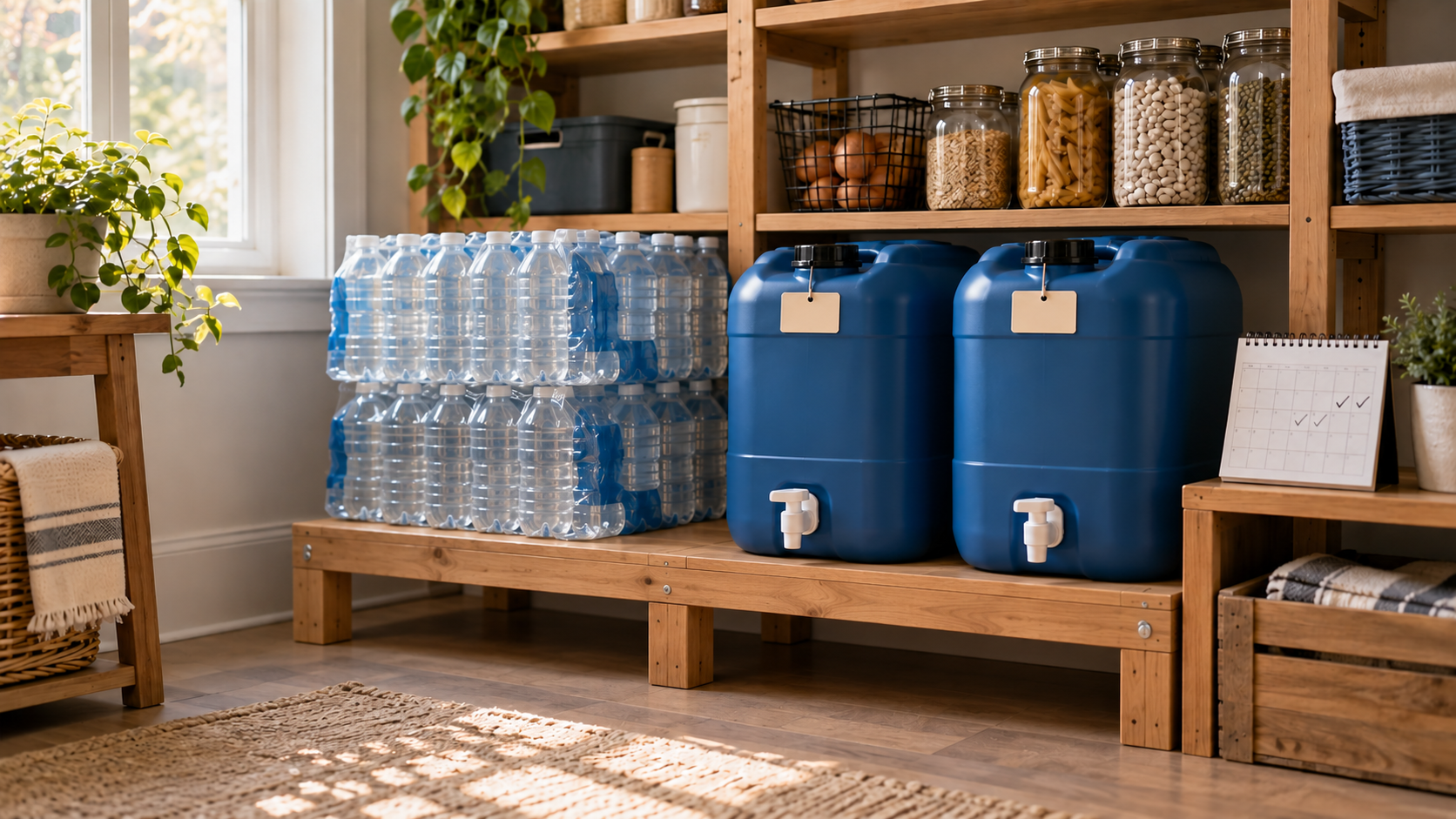
Stored water is easy to forget about. You tuck it onto a shelf, feel better knowing it is there, and then notice the date six months—or two years—later.
Is it still safe? Does bottled water really expire? Should you empty every container and start over?
The reassuring answer is that you do not need to guess. A simple rotation schedule will keep your emergency water supply dependable without turning it into another complicated household project.
The Quick Answer
- Unopened, commercially bottled water: Follow the expiration or best-by date printed by the manufacturer.
- Water you fill and store at home: Replace it every six months.
- Any stored water: Replace it sooner if the seal is broken, the container is damaged, the water has an unusual odor or appearance, or it may have been exposed to floodwater, fuel, pesticides, or other chemicals.
Those are the practical household guidelines from the Centers for Disease Control and Prevention. You do not need to determine the exact day water “goes bad.” You only need a dependable date for rotating it.
Ready Chateau Note: A date is a reminder to rotate your supply—not a home safety test. Water can be compromised before that date if its container, seal, or storage conditions have been compromised.
Start With the Kind of Water You Have
Not all stored water starts in the same place. The right rotation schedule depends on whether it came sealed from a commercial bottler or whether you filled the container yourself.
Commercially Bottled Water
For sealed bottled water, use the date printed on the package as your guide. The CDC advises households to observe the expiration date for store-bought water.
That keeps the decision refreshingly simple:
- Leave the bottles sealed until you need them.
- Store them where they will stay protected.
- Rotate them by the printed date.
The U.S. Food and Drug Administration regulates commercially bottled water as a food product. Bottlers must follow sanitation, testing, processing, and storage requirements intended to keep the product safe. You can read the FDA’s overview of how bottled water is regulated.
If the outer case has several dates or the date is difficult to read, write the earliest visible date on a piece of tape and place it where you can see it. You are creating a reminder, not a filing system.
Water You Fill at Home
If you fill your own food-grade water containers, replace the water every six months. Mark the fill date directly on each container so you will not have to rely on memory later.
Six months can sound surprisingly short. The point is not that water suddenly becomes unusable on day 181. The six-month schedule gives you a clear, conservative routine for water that was handled and packaged at home rather than in a regulated bottling facility.
Home-filled water has more opportunities for contamination to enter through hands, lids, funnels, spigots, or containers. A regular refresh helps you stay ahead of those variables.
If you are setting up home-filled containers for the first time, use containers made for drinking-water storage and follow the cleaning and filling directions in our guide, The Right Way to Store Emergency Water at Home. This article is about how long to keep the water; that guide will cover the container and setup decisions in full.
What Can Shorten the Life of Stored Water?
A rotation date assumes the water has remained sealed and properly stored. Replace it early when that is no longer true.
A Broken or Questionable Seal
Once a cap, lid, or spigot has been opened, the water is no longer in the same protected condition. Hands, cups, dust, and the surrounding air can introduce contamination.
If you open a large emergency container, treat it as water you are actively using. Keep it covered, dispense it without touching the opening, and use it promptly. Do not pour leftover water from a cup back into the container.
There is no single useful “opened water lasts exactly this many days” rule for every container and situation. A clean bottle opened in your kitchen is different from a jug being shared during a power outage. Good handling matters more than trying to stretch an opened container to a particular date.
Heat and Direct Sunlight
Stored water should be kept in a cool place and away from direct sunlight. Heat and sun can work against the container and the quality of the water over time.
A hot garage, an exposed shed, or the trunk of a car may be convenient, but those locations can experience major temperature swings. If that is the only storage space you have, check the supply more often and rotate it sooner when the bottles or containers show damage or deterioration.
Nearby Fuels, Pesticides, or Other Chemicals
Do not store drinking water near gasoline, paint thinner, pesticides, household chemicals, or other toxic substances. If you suspect the water or its container has been exposed to a chemical spill or fumes, do not taste it to investigate.
Boiling and ordinary household disinfection can kill many germs, but they cannot make water containing fuel, toxic chemicals, or radioactive material safe. The CDC’s emergency water guidance recommends using a different water source and contacting your local health department when chemical contamination is suspected.
Floodwater
Floodwater can carry sewage, chemicals, and other contaminants. Bottled water that has been exposed to floodwater should not be treated as part of your safe drinking supply.
This is one reason to store emergency water above the floor when possible. A sturdy shelf or raised platform gives the supply a little more protection from leaks and minor flooding.
A Damaged Container or Changed Water
Replace water if the container is leaking, cracked, swollen, badly dented, or otherwise damaged. Do the same if the water has an unusual odor, color, or visible material in it.
Just remember that normal-looking water is not proof that it is safe. Many contaminants cannot be seen, smelled, or tasted. When you know the seal or storage conditions were compromised, trust that information instead of the water’s appearance.
Safety First
Do Not Try to Rescue Chemically Contaminated Water
If stored water may have been exposed to fuel, pesticides, toxic chemicals, or floodwater, set it aside and use a safe replacement source. Boiling is not a fix for chemical contamination.
Can You Drink Stored Water After Its Date?
The safest practical answer is to rotate it rather than debate it.
For commercially bottled water, follow the printed date. For water filled at home, follow the six-month schedule. These rules give your household a clear standard and prevent an uncertain container from becoming the one you must rely on during an emergency.
If a date has passed, do not use a taste test to decide whether the water is safe. Taste and smell cannot identify every harmful contaminant.
Water that is merely due for routine rotation is different from water that may be contaminated. If the container stayed sealed, undamaged, and away from chemicals or flooding, you may be able to use the old water for non-drinking tasks such as flushing a toilet or cleaning outdoor tools. Do not use questionable water for drinking, cooking, brushing teeth, making ice, preparing infant formula, or giving to pets.
When there is any reason to suspect chemical or flood contamination, follow local public-health instructions for disposal. Do not repurpose it around food, people, animals, or gardens.
A Simple Water-Rotation Routine
The easiest system is one you can maintain in a few minutes twice a year.
1. Choose Two Reminder Dates
Pick dates already connected to a household routine. The first weekends in March and September work well, as do daylight-saving weekends if your area observes them.
Add a recurring calendar reminder called Check emergency water. If you fill containers at different times, put their exact replacement dates on the calendar instead.
2. Read the Labels
Check the date on commercially bottled water and the fill date on home-filled containers. If you cannot find a date, treat the container as due for rotation. A fresh label solves the uncertainty going forward.
3. Inspect the Supply
Look for:
- Broken seals
- Leaks or damp shelving
- Cracks, swelling, or damaged caps
- Unusual color, cloudiness, particles, or odor
- Signs of heat, sunlight, pests, flooding, or chemical exposure
If something looks wrong, replace it. Emergency water is there to remove uncertainty, not create more of it.
4. Replace What Is Due
Use the printed date for commercial bottles and the six-month rule for home-filled water. Replace any compromised containers immediately, even if their dates have not arrived.
5. Mark the New Date Clearly
Label home-filled containers Drinking Water and include the fill date. For cases of bottled water, place the printed date—or your planned rotation date—where it is easy to see without unpacking the case.
Then reset the reminder and move on.
The Five-Minute Version: Check the dates, check the seals, check the storage area, and replace anything you would hesitate to serve your family.
Common Stored-Water Mistakes
Waiting Until an Emergency to Inspect It
The worst time to discover a leaking jug is after the tap stops working. A quick check twice a year gives you time to replace damaged containers while water is easy to get.
Treating Every Date the Same
Commercially bottled water follows its printed date. Home-filled water follows a six-month replacement schedule. Keeping those two rules separate prevents both confusion and unnecessary work.
Keeping Water in a “Temporary” Location for Years
Water placed beside gasoline, under a sunny window, or in a hot vehicle is not protected simply because it is sealed. Storage conditions remain part of the safety plan.
Assuming Clear Water Must Be Safe
Appearance is only one clue. If you know a container was opened, flooded, damaged, or exposed to chemicals, replace it even when the water looks normal.
Forgetting Water for Pets
Pets need safe water too. Include them when calculating your supply, and apply the same rotation and replacement rules to the water you plan to give them.
Keep the Rest of the Plan Just as Simple
Water rotation works best as part of a small, repeatable preparedness routine.
If you are still deciding how much water your household needs, start with How Much Water Should You Store for an Emergency?. It will help you set a realistic target based on the people, pets, and needs in your home.
Then make sure the water is included in your broader 72-hour emergency kit. You do not need to finish everything in one weekend. A dependable supply built in manageable steps is far more useful than a perfect plan that never leaves the page.
The Bottom Line
For commercially bottled water, follow the date on the package. For water you fill at home, replace it every six months. Replace either one sooner if the seal, container, or storage conditions have been compromised.
That is the whole system: label it, protect it, check it, and rotate it. Once the reminder is on your calendar, your emergency water supply can go back to doing exactly what it should—waiting quietly until you need it.