
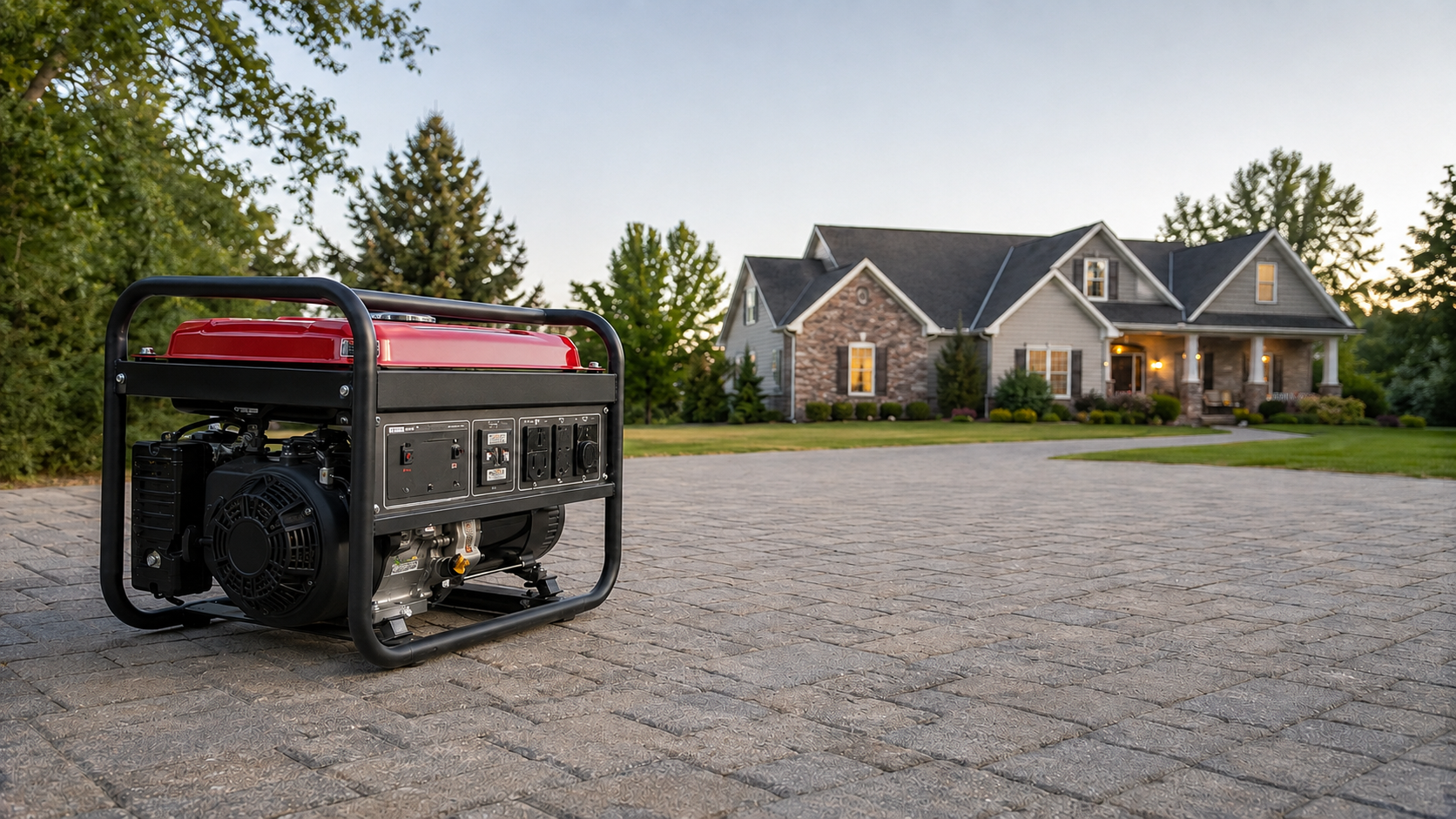
A portable generator can keep refrigerators cold, charge essential devices and power equipment your household depends on during an outage.
It can also create carbon-monoxide, electrical and fire hazards when it is placed, connected or refueled incorrectly.
Most generator accidents do not happen because someone intended to take a dangerous risk. They happen because the power is out, the weather is bad and someone is trying to get the lights back on quickly.
That is why generator safety should be worked out before the outage—not while standing outside in the dark with a machine you have not used since the last storm.
This guide focuses on the mistakes that matter most and the practical steps that help prevent them.
Start With the Generator’s Manual
Portable generators are not all designed or wired the same way.
Before operating yours, read the manufacturer’s instructions for:
- Safe placement and required clearances
- Grounding
- Weather protection
- Extension cords
- Electrical capacity
- Starting and shutdown
- Refueling
- Maintenance and storage
Keep the manual where you can find it during an outage.
If the original manual is missing, find the generator’s model number on its identification label and search the manufacturer’s official website. Look for a section labeled Support, Manuals, Product Documentation or Downloads.
Confirm that the model number on the manual matches your generator exactly before following its instructions. If the manual is no longer available online, contact the manufacturer or an authorized dealer.
Avoid relying on an unofficial manual-download site when the manufacturer’s version is available.
General safety guidance is important, but it does not replace the instructions for your particular generator.
Never Run a Portable Generator Indoors
A fuel-burning generator produces carbon monoxide, or CO. Carbon monoxide cannot be seen or smelled, and it can build up quickly enough to cause illness, unconsciousness or death.
Never operate a portable generator in:
- A house
- A garage
- A basement
- A crawlspace
- A shed
- A porch
- A carport or breezeway
- Any other enclosed or partially enclosed space
Opening the garage door does not make the garage safe. Opening windows or placing fans nearby does not make an indoor location safe either.
The generator belongs outside.
The CDC says generators should be operated outdoors more than 20 feet from windows, doors and vents. Point the exhaust away from the home and from openings that could allow fumes inside.
That distance is not permission to place the generator anywhere a cord happens to reach. Consider the direction of the exhaust, nearby buildings and whether fumes could enter a neighbor’s home.
Do not move the generator closer because an extension cord is too short. Use an appropriately rated cord that allows the generator to remain in a safe location.
Safety First
If a carbon-monoxide alarm sounds, get everyone outside into fresh air and call 911. Do not remain inside looking for the source, and do not re-enter until emergency responders say it is safe.
Possible symptoms of carbon-monoxide poisoning include headache, dizziness, weakness, nausea, vomiting, chest pain and confusion. Someone who is sleeping may become seriously ill without recognizing the warning signs.
If anyone develops possible symptoms while a generator or another fuel-burning device is operating, move to fresh air immediately and seek emergency help.
Use Working Carbon-Monoxide Alarms
Correct generator placement is the first defense against carbon monoxide. Working CO alarms provide another important layer of protection.
Use battery-operated CO alarms or plug-in alarms with battery backup. Battery backup matters because an ordinary plug-in alarm may not work during the same outage that caused you to use the generator.
Install CO alarms on every level of the home and outside sleeping areas, following the alarm manufacturer’s instructions. Test them regularly and replace batteries or the alarm itself when required.
Do not place a generator closer to the house because you have CO alarms. An alarm is a warning device, not a substitute for safe placement.
Never Backfeed Power Through a Wall Outlet
Never try to power your house by connecting a generator to an ordinary wall outlet.
This practice—often called backfeeding—can send electricity into household wiring and out onto utility lines. It can injure or kill utility workers, neighbors or anyone who encounters wiring believed to be de-energized. It can also damage the generator or household electrical system and create a fire hazard.
A homemade cord with male plugs on both ends is especially dangerous and should never be used.
There are two basic ways to use portable-generator power:
- Connect selected appliances directly to the generator with properly rated extension cords, following the generator and appliance instructions.
- Connect the generator to designated household circuits through approved transfer equipment installed by a qualified electrician.
Transfer equipment isolates generator power from utility power and prevents dangerous backfeeding. Requirements vary with the generator, electrical system and local rules, so connecting a generator to household wiring is not a do-it-yourself project.
If you want the generator to supply household circuits, arrange the installation before an outage. Consult a qualified electrician and, where appropriate, your utility or local code authority.
Use the Right Extension Cords
An extension cord becomes part of the electrical system while the generator is running. A household cord chosen only because it is nearby may not be suitable.
Use cords that are:
- Intended for outdoor use
- Grounded and equipped with three-prong plugs
- Rated to carry the connected electrical load
- Long enough to preserve safe generator placement
- Free from cuts, crushed areas, exposed conductors and damaged plugs
- Used according to the generator and appliance instructions
A cord that is too light for the load can overheat. A damaged cord can create a shock or fire hazard.
Do not run cords through standing water or place connections where they can become wet. Protect cords from vehicle traffic, sharp edges, closed doors and other locations where they could be crushed or damaged.
Do not remove a grounding pin to make a plug fit.
The generator’s grounding requirements depend on its design and how it is connected. Follow the manufacturer’s instructions rather than assuming that every generator requires the same grounding arrangement.
Keep the Generator and Connections Dry
Generators are often needed because of hurricanes, thunderstorms, ice storms or other conditions that also bring rain and moisture.
Electricity and water are a dangerous combination.
The Occupational Safety and Health Administration advises keeping portable generators dry and not operating them in rain or wet conditions. Never handle the generator’s electrical components with wet hands or while standing in water.
Follow the generator manufacturer’s instructions for protection from rain and snow. Any operating cover or shelter must be approved or specifically permitted for use with your generator and must preserve all required ventilation, exhaust direction and clearances.
Do not drape a tarp over a running generator or improvise an enclosure around it.
Most importantly, do not solve the rain problem by moving the generator into a garage, shed, porch or other enclosed or partially enclosed space. That replaces an electrical hazard with a carbon-monoxide hazard.
Plan for safe weather protection before the storm. If you cannot keep the generator dry while also meeting its outdoor placement and clearance requirements, do not operate it until conditions allow safe use.
Do Not Overload the Generator
A generator can supply only a limited amount of power.
Connecting more equipment than it can support may trip its protection, damage appliances, overheat cords or create a fire hazard. Some appliances also require more power when they start than they use while running.
Before an outage, identify what you actually need to operate. For many households, that might include:
- A refrigerator or freezer
- A few lights
- Phone chargers
- A modem or router
- Necessary medical equipment
- A limited number of other essential devices
Find the running and starting requirements for the equipment you intend to connect. Make sure the combined load remains within the generator manufacturer’s limits.
If you are uncertain about your needs, our comparison of a portable power station versus a generator explains the factors to evaluate before choosing a backup-power system.
A generator does not have to power the entire house to be useful. Managing a few essential loads safely is better than overloading the generator while trying to recreate normal life.
Shut Down and Cool the Generator Before Refueling
Gasoline and other generator fuels require careful handling.
A running generator becomes hot. Spilled fuel can ignite if it contacts the engine, muffler or another hot component.
Before refueling:
- Disconnect or turn off electrical loads according to the generator instructions.
- Shut down the generator.
- Allow it to cool as directed by the manufacturer.
- Refuel outdoors using the correct fuel and an approved container.
- Clean up any spill according to the manufacturer’s instructions before restarting.
Never refuel a generator while it is operating or still hot.
Store fuel outside living areas in approved, properly labeled containers. Keep it away from flames, pilot lights, electrical equipment and other ignition sources. Follow local rules governing the type and amount of fuel that may be stored.
Do not assume that a garage is automatically a safe fuel-storage location. Fuel vapors can travel and ignite when they reach a pilot light, switch or another ignition source.
Fuel also ages. A safe generator plan includes knowing how the manufacturer says to store both the machine and its fuel between outages.
Our guide to why a generator may not start after sitting explains why storage and maintenance matter before the next emergency.
Keep the Generator Away From Combustible Materials
Portable generators produce heat in addition to exhaust.
Operate the generator on a stable surface with the clearance required by its manufacturer. Keep leaves, cardboard, stored fuel and other combustible materials away from the engine and muffler.
Do not place the generator where dry grass, storm debris or other material could contact a hot component.
Keep children and pets away from the operating area. A generator can have hot surfaces, exposed cords, fuel and moving components even when it does not look especially dangerous.
Remember that the engine and muffler may remain hot after shutdown.
Inspect the Generator Before Every Use
An outage is not the time to discover that a cord is damaged, fuel is leaking or the generator has not been maintained.
Before starting it, check for:
- Fuel or oil leaks
- Loose or damaged parts
- Blocked air inlets or exhaust
- Damaged receptacles
- Frayed or unsuitable extension cords
- Deteriorated fuel lines
- Pest nests or debris
- Correct oil and fuel levels
- Maintenance that is due
Do not operate a generator that is leaking fuel, smoking unexpectedly, producing unusual odors or showing signs of electrical or mechanical damage.
If you do not understand what you are seeing, stop and consult the manual, manufacturer or a qualified service professional.
A brief pre-use inspection does not replace scheduled maintenance. Start, maintain and test the generator according to its instructions so that you know whether it works before the next outage.
Continue Monitoring the Generator While It Runs
Conditions around a generator can change after it starts.
Periodically confirm that:
- The generator remains dry and stable.
- Exhaust is still directed safely away.
- Cords and connections have not become wet or damaged.
- Fuel or oil is not leaking.
- The electrical load remains within capacity.
- Children, pets and other people cannot enter the operating area.
- Wind, water, debris or other conditions have not made the location unsafe.
Follow the manufacturer’s instructions concerning supervision, shutdown and overnight operation. Do not assume that a generator can be started and forgotten until morning.
Apartment and Renter Considerations
A fuel-burning portable generator is not a practical choice everywhere.
Never operate one inside an apartment, on a balcony, in a hallway, on an enclosed patio or anywhere that does not provide a safe outdoor operating location. Exhaust could enter your unit or another resident’s home.
Lease terms, building rules and local regulations may also restrict generator use and fuel storage.
If you do not have an appropriate outdoor operating location, consider whether battery banks or a portable power station can meet your most important needs. These devices avoid engine exhaust, but they still have capacity, charging and electrical-safety limitations.
Do not improvise an unsafe generator location because the power is out.
Prepare the Safe Setup Before You Need It
A generator should not be an unopened machine that comes out for the first time after the lights go off.
Before the next outage:
- Read the correct manual.
- Choose a safe outdoor operating location.
- Measure more than 20 feet from doors, windows and vents.
- Point the exhaust away from buildings and openings.
- Determine how you will keep the generator dry without enclosing it.
- Install and test CO alarms.
- Obtain properly rated extension cords.
- Calculate the electrical loads you plan to connect.
- Arrange approved transfer equipment if the generator will supply household circuits.
- Store fuel safely.
- Inspect, maintain and test the generator as directed.
If any part of the setup depends on guesswork during an emergency, solve it now.
The Ready Chateau Generator Safety Rule
A generator is useful only when it can be operated without creating a greater emergency than the outage itself.
Keep it outside. Keep it more than 20 feet from doors, windows and vents. Point the exhaust away. Keep the generator and connections dry. Connect it correctly. Refuel it only after shutdown and cooling. Never backfeed power into household wiring.
Most importantly, decide how you will use it safely before the power goes out.
If you are still developing your outage plan, begin with what to do when the power goes out. Then test your generator, review its manual and correct any missing part of your setup while you still have light, time and working electricity.