
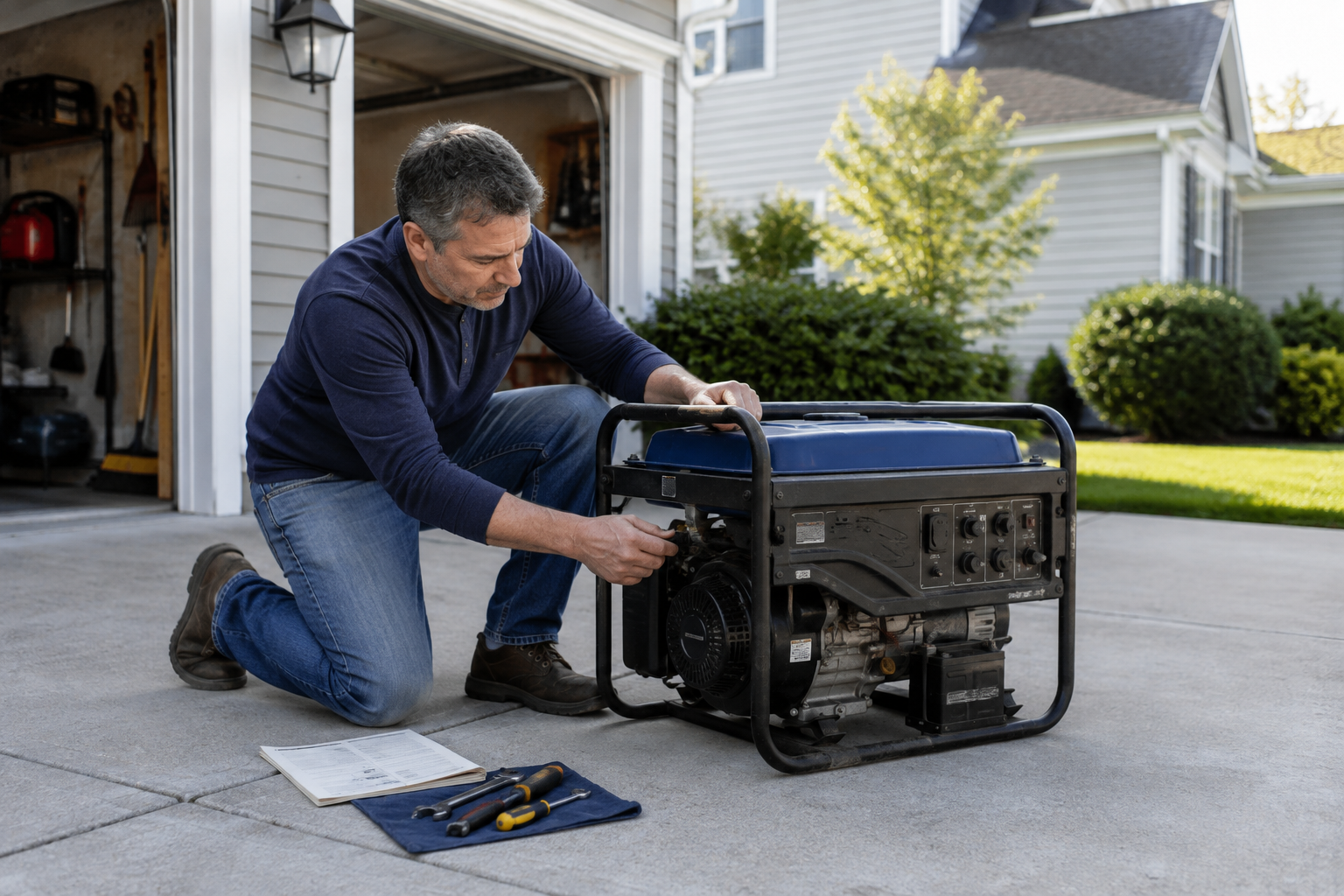
A portable generator does not need constant attention. It does need a routine.
The trouble is that generators measure maintenance in two different ways: time on the calendar and hours on the engine. A generator can sit for months and develop fuel or battery problems without adding a single operating hour. During a long outage, it can reach an oil-change or inspection interval in just a few days.
This checklist gives you a practical way to keep up with both. It is written for portable generators. Standby generators have different systems and service requirements.
Your owner’s manual remains the authority for your machine. Use this checklist to remember what to inspect and when to look at the manual—not to replace the manufacturer’s schedule.
Start With Four Pieces of Information
Before you make a maintenance plan, find and record:
- Generator manufacturer and model number
- Engine model number, if listed separately
- Required engine oil type and capacity
- Maintenance intervals from the owner’s manual
Keep the manual with the generator or save a digital copy where you can reach it during an outage. If the original is missing, use the manufacturer’s website and search by the exact model number.
Also locate the hour meter. If your generator does not have one, keep a simple written estimate of operating hours. Calendar reminders alone cannot tell you when an engine has worked long enough to need service.
Before Every Use
Do this inspection while the generator is off, cool and sitting on a level surface:
- Look for fuel or oil leaks.
- Inspect fuel lines, the fuel cap and visible connections for cracks or damage.
- Check the engine-oil level using the procedure in the manual.
- Confirm that the air intake, cooling openings and exhaust area are clear.
- Check the air filter if the manual calls for a pre-use inspection.
- Inspect outlets, controls and the frame for damage.
- Inspect extension cords from end to end for cuts, crushed areas, damaged insulation or missing ground prongs.
- Make sure the fuel is fresh and approved for the generator.
- Confirm that the generator will operate outdoors in its safe location.
- Test the home’s carbon-monoxide alarms.
Do not start a generator that is leaking fuel, has damaged wiring or shows another condition you cannot address confidently.
Safety First
Operate a portable generator outdoors only, at least 20 feet from the house, with the exhaust pointed away from the home and other occupied buildings. Never run one in a garage, shed, basement, porch, carport or other enclosed or partially enclosed space.
The U.S. Consumer Product Safety Commission also recommends checking that outdoor extension cords have adequate wattage ratings, intact insulation and all three prongs. Never connect a generator to home wiring through a wall outlet. See our complete portable-generator safety guide before relying on the generator during an outage.
During a Long Outage
Maintenance does not pause because the power is out. Record the hours each day and compare the total with the manual’s service schedule.
- Check the oil as often as the manufacturer requires.
- Shut the generator down and let it cool before refueling or servicing it.
- Watch for leaks, unusual vibration, surging, abnormal smoke or changing engine sound.
- Keep cooling openings and the surrounding operating area clear.
- Recheck cords and connections for heat or damage.
- Complete hour-based service when it becomes due.
A generator running around the clock can accumulate 72 operating hours in three days. That is why the hour meter matters. A service interval that sounds distant during storage can arrive quickly during an extended outage.
Do not touch or reposition a damaged, wet or overheated cord while it is energized. Shut down the connected load and generator using the manufacturer’s procedure before inspecting or replacing it.
After Every Use
Once the generator is off and completely cool:
- Record the ending hour-meter reading or estimated operating time.
- Note any hard starting, surging, smoke, warning lights or shutdowns.
- Inspect for new leaks, loose hardware or damage.
- Remove dirt and debris using the cleaning method allowed by the manual.
- Check whether an oil change or other hour-based service is now due.
- Prepare the fuel system for the expected storage period.
- Recharge the electric-start battery if the manual requires it.
- Store cords and operating supplies where they can be found.
Do not wash the generator with a garden hose or pressure washer unless the manufacturer specifically permits it. Water forced into the control panel, alternator or electrical connections can create damage that is not visible from the outside.
Follow the Manual’s Maintenance Schedule
Manufacturers do not use one universal schedule. Even generators from the same company may have different break-in periods, oil-change intervals and service requirements.
Your manual may schedule maintenance by months, operating hours or whichever comes first. It may also call for more frequent service in dusty, hot or demanding conditions.
Use the manual to fill in your generator’s actual intervals for these items:
Engine oil
- Check the oil level at the required interval.
- Complete the first oil change after the specified break-in period.
- Change the oil at the regular hour or calendar interval.
- Use the specified oil type, viscosity and quantity.
- Recycle used oil through an appropriate collection location.
Do not assume that every generator uses the same first-change or regular-change interval. Honda and Generac manuals demonstrate how schedules can vary by model and operating conditions.
Air filter
- Inspect it at the interval in the manual.
- Clean or replace it according to its type and the manufacturer’s procedure.
- Service it more often when operating in dusty conditions if directed.
- Replace a damaged filter.
Foam and paper elements are not maintained the same way. Do not wash, oil or blow out a filter unless the instructions for that exact filter permit it.
Spark plug
- Inspect the plug at the scheduled interval.
- Check the condition and gap using the manual’s specifications.
- Replace it with the specified plug when required.
- Start the threads by hand during installation to reduce the risk of cross-threading.
Spark arrestor and cooling system
- Inspect or clean the spark arrestor when the manual requires it.
- Keep cooling-air openings and engine fins clear of debris.
- Let the muffler and engine cool before touching nearby components.
Fuel system
- Use fresh fuel that meets the manual’s requirements.
- Inspect hoses, the tank, cap and connections for deterioration or leaks.
- Treat or drain gasoline according to the expected storage period.
- Date stored fuel and rotate it before it becomes a problem.
Fuel stabilizer can slow deterioration when added correctly to fresh gasoline, but it cannot restore stale fuel. See Should You Use Fuel Stabilizer in Your Generator? for the complete decision process.
Electric-start battery
- Inspect the battery and terminals as directed.
- Maintain its charge using the manufacturer’s approved method.
- Check for corrosion, swelling, leakage or damaged cables.
- Replace the battery when it no longer holds a dependable charge.
Dealer or technician service
- Identify maintenance the manual assigns to a qualified technician.
- Schedule valve-clearance checks or other specialized work when due.
- Address recalls, persistent fuel leaks and electrical problems before the next outage.
Some work requires model-specific procedures, special tools or mechanical experience. The checklist should help you catch those items—not encourage you to take apart equipment you are not prepared to service.
Complete a Readiness Check Before Storm Season
Do not wait for a warning cone to appear on the weather map.
Several weeks before the season when outages are most likely:
- Review the maintenance schedule and operating-hour record.
- Complete any service that will become due soon.
- Inspect the generator, cords and connection equipment.
- Check the electric-start battery.
- Confirm that stored fuel is fresh or properly rotated.
- Move the generator to its planned outdoor operating location.
- Start it using the manufacturer’s procedure.
- Test it under an appropriate load if the manufacturer permits.
- Confirm stable operation and electrical output.
- Test the home’s smoke and carbon-monoxide alarms.
- Replace missing supplies before stores become crowded.
The goal is not simply to hear the engine start. The generator must operate safely and carry an appropriate load before you count it as ready.
Our guide to how often you should run your generator explains why the manufacturer’s test schedule matters and why a brief no-load start may not prove enough.
Prepare It Properly for Storage
Storage is part of maintenance. Old gasoline, a discharged battery, moisture and pests can undo the work you completed during the rest of the year.
Before putting the generator away:
- Let it cool completely.
- Inspect for leaks and damage.
- Record operating hours and completed service.
- Follow the manual’s fuel-treatment or draining procedure.
- Maintain or disconnect the starting battery as directed.
- Clean the exterior without forcing water into electrical components.
- Store the generator upright in a dry, protected location.
- Keep it away from flames, sparks and other ignition sources.
- Store gasoline outside living areas in an approved container.
See How to Store a Portable Generator the Right Way for the complete storage procedure.
Keep a Simple Maintenance Record
You do not need a complicated spreadsheet. A notebook page kept with the manual is enough if you use it consistently.
Record:
- Date
- Hour-meter reading
- Work performed
- Oil, filter, spark plug or other parts used
- Fuel treatment or draining completed
- Problems noticed
- Next service due
The record answers the question that causes trouble during an outage: “Did I already do that, or was I planning to do it?”
Stop and Get Help When Necessary
Do not operate the generator until it has been properly inspected or repaired if you find:
- A persistent fuel or oil leak
- A cracked fuel line or damaged tank
- Burned, loose or damaged wiring
- A damaged outlet, plug or grounding component
- Abnormal smoke, surging, knocking or vibration
- Repeated low-oil, carbon-monoxide or fault shutdowns
- Unstable or missing electrical output
- A repair that exceeds your tools, manual or experience
If the generator has already been neglected and will not start, use our guide to a generator that will not start after sitting before assuming the machine is ruined.
The Bottom Line
Generator maintenance becomes manageable when you stop treating it as one annual chore.
Inspect the generator before every use. Track its operating hours. Follow the model-specific schedule for oil, filters, spark plug, fuel system, battery and professional service. Prepare it correctly for storage, then test it early enough to fix a problem before an outage.
The generator may spend most of its life waiting. Your maintenance record is what makes that waiting useful instead of risky.
Sources
- U.S. Consumer Product Safety Commission — Portable Generator Safety
- U.S. Consumer Product Safety Commission — Generator and Carbon-Monoxide Safety
- Honda Power Equipment — EG5000X Owner’s Manual and Maintenance Schedule
- Generac — Maintaining a Portable Generator
- Generac — Portable Generator Maintenance Schedule
- Champion Power Equipment — Portable Generator Maintenance Schedule and Checklist
- U.S. Environmental Protection Agency — Managing, Reusing and Recycling Used Oil