
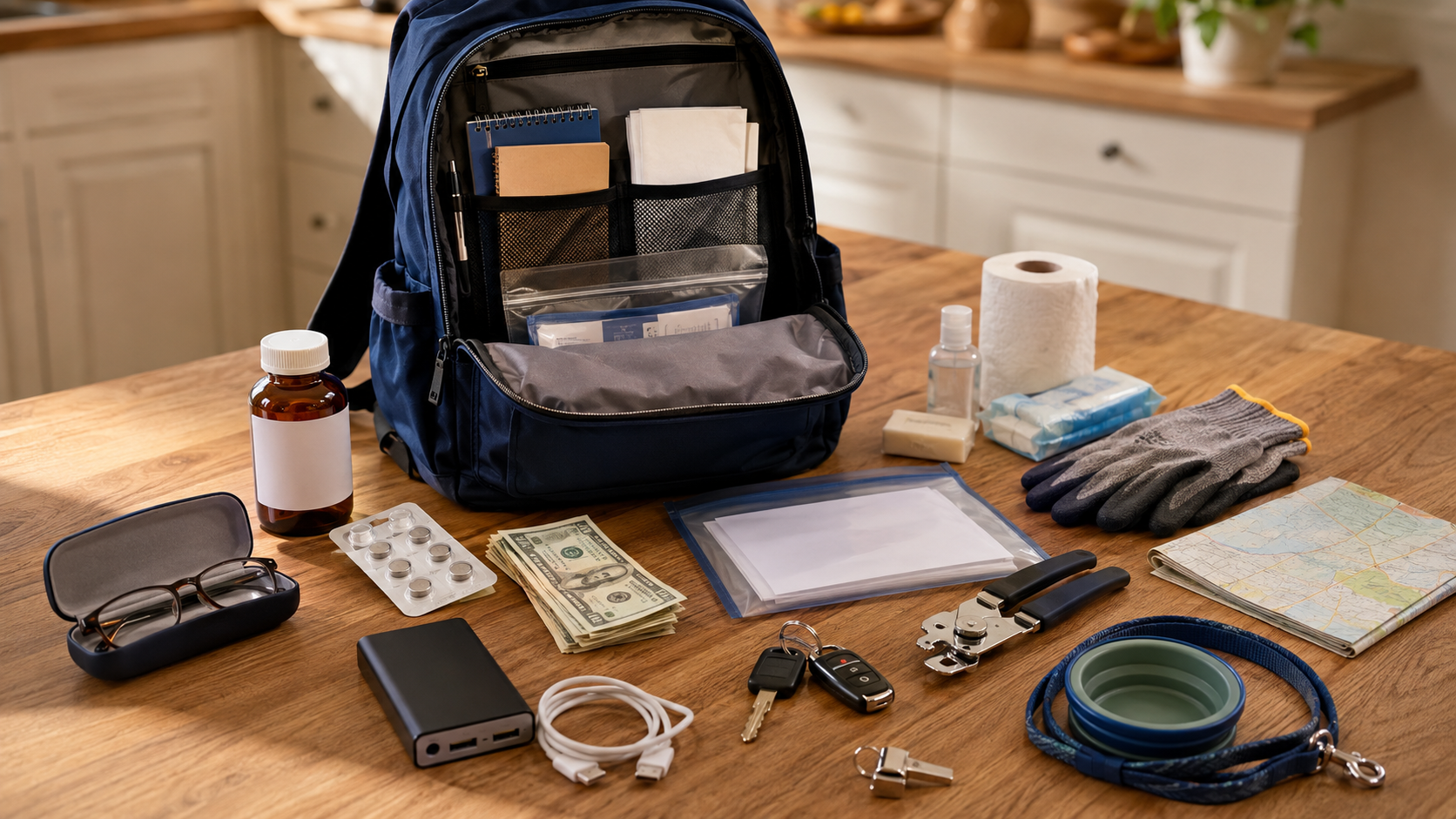
Most emergency-kit lists begin with the obvious supplies: water, food, a flashlight, batteries and a first-aid kit. Those basics matter, but they are not the items households are most likely to miss after the first round of shopping.
The overlooked items are usually ordinary things you depend on every day. They are the medication in the bathroom cabinet, the charging cable beside the bed, the spare key in a kitchen drawer and the pet records saved on your phone.
If you already have an emergency kit, you may not need a bigger shopping trip. You may just need a more thoughtful review.
First, Decide What You Mean by an Emergency Kit
One container does not have to solve every emergency. A home supply, an evacuation bag and a small vehicle kit serve different purposes. Start with the complete home emergency preparedness checklist if you are still building the basics, then decide which of the following items belong at home, in a grab-and-go bag or in your vehicle.
The goal is not to fit your entire household into one backpack. It is to keep essential items available when power, stores, internet access or normal routines are interrupted.
1. Prescription Medications
Food and water are easy to remember because every standard checklist includes them. Daily medication is easier to overlook because it remains in active use.
Ask your healthcare provider or pharmacist how to plan for an emergency supply, refill restrictions and medications that require refrigeration. Do not change doses, stockpile medication or improvise storage conditions. If cold storage is required, follow the medication label and your pharmacist’s instructions.
Check medication dates when you review the rest of the kit. A written reminder to collect an actively used prescription can also be useful if keeping a separate supply is not practical.
2. A Printed Medication and Medical-Information List
A medication bottle does not tell a responder everything they may need to know. Keep a current list of medications, doses, allergies, major medical conditions, doctors, pharmacies and emergency contacts.
Include only information that would be useful during an emergency, and protect it from water and casual access. The CDC recommends tailoring emergency kits to individual medical and communication needs, including important health documents and support contacts.
3. Spare Glasses, Contact Supplies and Hearing-Aid Batteries
A flashlight will not help much if you cannot see clearly enough to use it. Add spare prescription glasses if available, a protective case and any contact-lens supplies you regularly need.
For hearing aids, include the correct batteries or charging equipment. Label small supplies clearly so another household member can identify them without guessing.
4. The Correct Charging Cables and a Charged Battery Bank
A battery bank is useful only if it is charged and paired with the right cables. Check every phone, tablet, radio, medical device and rechargeable light your household expects to use.
Store the required cables with the battery bank instead of borrowing them from everyday use. Recharge the bank on a recurring schedule. If a device depends on electricity, include it when evaluating your household’s backup-power needs.
5. Emergency Cash in Usable Denominations
Card readers, ATMs and payment apps may not work during a power or communications outage. Keep a reasonable amount of cash for your household in a secure location, including smaller bills that are easier to use when a business cannot make change.
There is no universal dollar amount. Consider the likely cost of fuel, food, transportation and one or two nights away from home, then choose an amount that fits your circumstances without creating another security risk.
6. A Printed Contact List
Most people no longer memorize phone numbers. If your phone is lost, damaged or out of power, a printed contact list can become surprisingly important.
Include household members, an out-of-area contact, doctors, veterinarians, insurance providers, utilities and anyone responsible for children, older adults or pets. Keep the list short enough to update easily, and place a copy in each kit where it may be needed.
7. Secure Copies of Essential Documents
You may need identification, insurance information, medical details or proof of residence after an evacuation or property loss. Keep protected copies of the documents your household would need to recover or obtain assistance.
Do not place irreplaceable originals or unsecured sensitive information in an easily stolen bag. Use a waterproof document pouch for appropriate paper copies, and consider an encrypted digital backup that you know how to access without relying on your home computer.
8. Spare House and Vehicle Keys
An evacuation can become much harder when the only vehicle key is misplaced or another household member has the only house key. Add clearly identified spare keys where authorized family members can reach them.
Do not label keys with a full home address, and do not leave them in a vehicle or unsecured exterior location. The point is reliable access, not creating an easy path into your property.
9. A Manual Can Opener
Canned food does not help if the only opener is electric. Put a sturdy manual can opener with the food supply, then test it before assuming it works.
This is also a good moment to check whether your stored food can be prepared with the water, fuel and equipment you expect to have. Our guide to building an emergency food supply without wasting money can help you choose foods your household will actually use.
10. Personal-Hygiene and Sanitation Supplies
Small sanitation problems become large comfort and health problems quickly. Think beyond a bar of soap. Depending on your household, useful supplies may include toilet paper, hand sanitizer, moist wipes, garbage bags, menstrual products, diapers, incontinence supplies, toothbrushes and a small amount of unscented cleaning soap.
Choose compact quantities for an evacuation bag and larger quantities for a home supply. Keep liquids sealed so one leak does not ruin documents, food or electronics.
11. Weather-Appropriate Clothing and Sturdy Shoes
An emergency rarely waits until everyone is properly dressed. Keep sturdy closed-toe shoes, work gloves and a change of clothing where they can be reached quickly.
Adjust the kit as seasons change. Cold-weather households may need hats, gloves and insulating layers. Hot-weather households may prioritize lightweight clothing and sun protection. Replace children’s clothing as they grow.
12. A Paper Map of the Local Area
Navigation apps are convenient until a phone battery dies, cell service fails or roads close. A local paper map provides a backup view of alternate routes, nearby towns, waterways and major landmarks.
Mark important destinations without adding sensitive household information. Consider shelters, hospitals, family meeting places and more than one route away from your neighborhood.
13. Complete Pet Supplies
Pet food alone is not a pet plan. Include water, medication, feeding instructions, waste supplies, a leash or harness, identification, a carrier when appropriate and recent veterinary records.
The CDC pet preparedness checklist also recommends recent photographs, microchip information and a waterproof container for records. A collapsible bowl and familiar blanket can make an evacuation easier without taking much space.
14. Supplies Unique to the People in Your Household
Generic kits are built for generic people. Your household may include an infant, a pregnant person, a young child, an older adult or someone who uses mobility, communication or medical equipment.
Walk through one ordinary day and list what each person uses. The CDC emergency-kit checklist for pregnant women, infants and children is a useful prompt for needs that broad supply lists may miss.
Comfort items matter too. A familiar toy, a simple activity or noise-reducing headphones may help a child or adult manage a stressful disruption.
15. A Whistle
A whistle is small, inexpensive and easier to sustain than shouting. It may help you signal your location if you are trapped, separated from others or unable to call out loudly.
Attach it where it can be reached rather than burying it at the bottom of the kit. A whistle is one signaling tool, not a substitute for following evacuation orders, carrying a charged phone or telling others where you plan to go.
Do Not Buy Everything Again
Preparedness improves when supplies are organized, current and usable—not when the same products are purchased repeatedly. Before buying anything, take inventory of what you already own.
Move suitable duplicates into the kit, write down items that must remain in daily use and buy only the gaps. That practical approach is the same one we recommend when you start with the basics of household emergency preparedness.
Give Your Emergency Kit a 15-Minute Review
Open the kit and choose five items from this list to check today. Confirm that medications and records are current, cables fit, the battery bank is charged, clothing still fits and pet supplies match your present needs.
Then put the next review on your calendar. A modest kit that your household understands and maintains is more useful than an impressive collection no one has checked in years.