
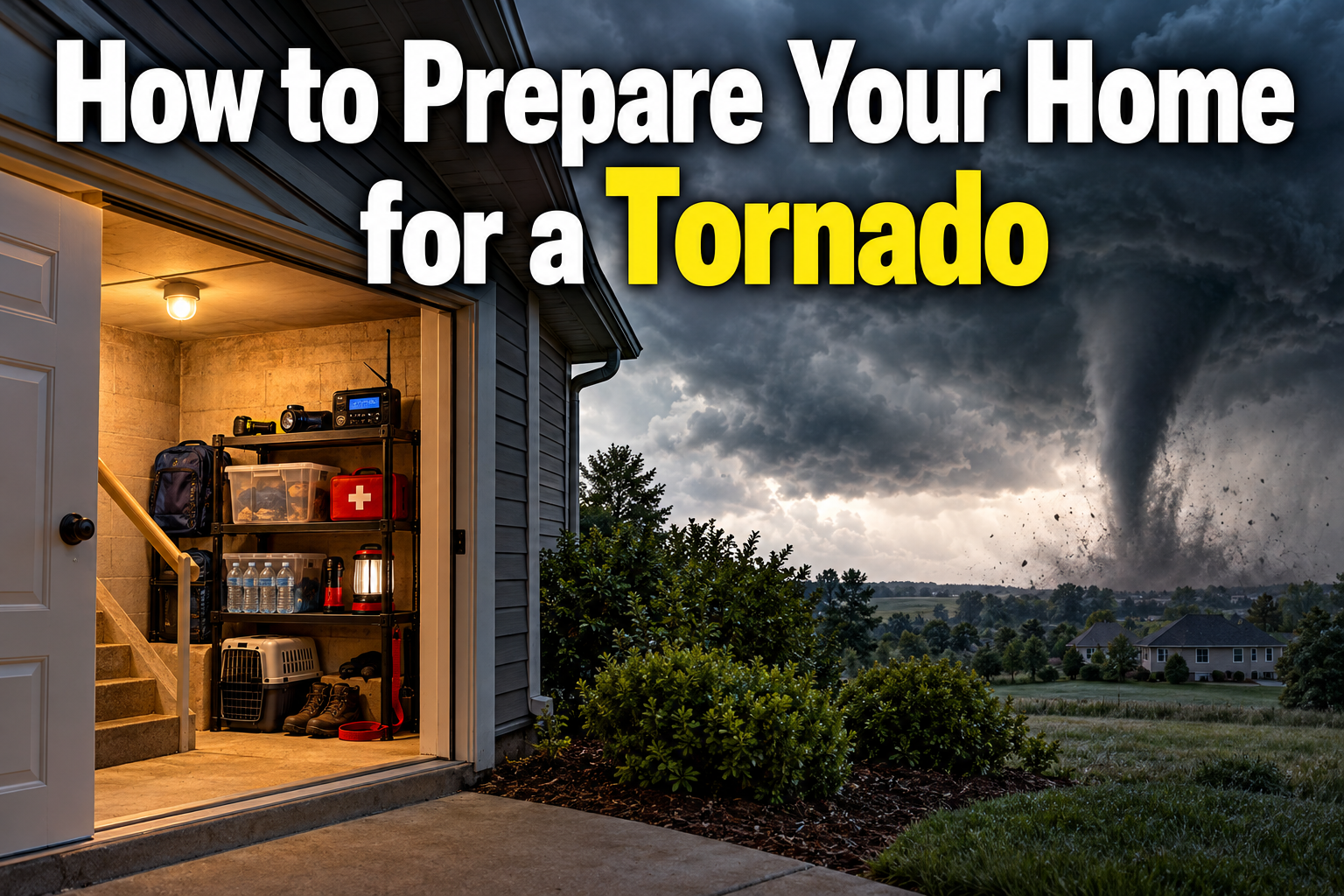
Tornadoes are different from many other emergencies because you may have very little time to react once a warning is issued.
That makes preparation especially important.
You do not want to hear a tornado warning in the middle of the night and then start deciding where everyone should go, looking for shoes, trying to find the dog or wondering whether the bathroom or hallway is safer.
Those decisions should already be made.
The goal is simple: know how you will receive the warning, know exactly where you will shelter, and have what you need waiting there before severe weather arrives.
For a step-by-step household checklist, see our Tornado Preparedness Checklist for Homeowners.
Start by Choosing the Safest Place in Your Home
The first question is not what supplies to buy.
It is where will you go?
If your home has a basement, use an interior part of it, away from windows. If you do not have a basement, choose a small interior room without windows on the lowest floor, such as a bathroom, closet or interior hallway.
Put as many walls as possible between you and the outside. CDC tornado safety guidance
Avoid rooms with windows, exterior rooms, upper floors when a lower floor is available, and large open rooms.
Also avoid sheltering directly below particularly heavy objects such as a refrigerator or piano that could fall through a damaged floor.
If you have a properly designed tornado safe room or storm shelter, use it.
Short Answer
The best available tornado shelter in most homes is a basement, storm shelter or safe room. Without one, use a small, windowless interior room on the lowest floor and stay away from windows.
Set Up Your Tornado Shelter Before You Need It
Once you have chosen the safest location, make it usable.
A closet packed from floor to ceiling with storage boxes is not very useful if you have to empty it while a tornado warning is already in effect.
Keep enough room for everyone in the household, including pets.
You do not need to turn the space into a second emergency pantry. A small collection of useful supplies is enough:
- Flashlights or headlamps
- Spare batteries
- NOAA weather radio
- Portable phone charger
- Basic first-aid supplies
- Sturdy shoes
- Work gloves
- Blankets or sleeping bags
- Whistle
- Essential medications
- Pet leash or carrier
Sturdy shoes and gloves can be especially useful after a tornado, when broken glass, nails, splintered wood and other debris may make walking through a damaged area dangerous. CDC recommends sturdy shoes or boots, long sleeves and gloves around storm debris. CDC after-tornado safety guidance
You probably already own most of these things.
The important part is having them where you can reach them quickly.
Make Sure a Warning Can Wake You Up
One of the most dangerous tornado scenarios happens while people are asleep.
Do not depend on seeing the storm coming, and do not depend on only one warning method.
Your warning system might include:
- Wireless Emergency Alerts on your phone
- A reliable weather app
- Local television or radio
- A NOAA Weather Radio with an alert function
The National Weather Service recommends having ways to receive tornado watches and warnings and knowing how warnings are distributed where you live. National Weather Service tornado preparedness guidance
For overnight severe weather, an alert-capable NOAA weather radio provides another way to receive a warning while you are asleep.
Related: Best NOAA Weather Radios for Tornadoes and Severe Weather
The point is not to replace your phone.
It is to avoid making your phone your only warning method.
Know the Difference Between a Tornado Watch and Warning
These two terms should trigger different actions.
Tornado Watch — Be Prepared
Tornadoes are possible in and near the watch area.
Pay attention to changing weather, check your warning methods, make sure the shelter area is accessible and be prepared to act quickly.
This is also a good time to bring pets inside and make sure everyone knows the plan.
Tornado Warning — Take Action
A tornado has been sighted or indicated by weather radar, creating an imminent danger to life and property.
Take shelter immediately.
Do not spend those minutes gathering supplies from around the house.
That is why your shelter should already be prepared.
Protect Yourself From Flying and Falling Debris
Once you reach your shelter, get as low as practical and protect your head and neck.
If possible, get underneath something sturdy. Blankets, sleeping bags or a mattress can provide additional protection from debris.
Some households also keep helmets in their tornado shelter.
CDC notes that research has not established how effective helmets are during tornadoes. A helmet should therefore never replace proper shelter. If you choose to use one, keep it in the shelter so you do not waste valuable time searching for it after a warning is issued.
That leads to a useful rule for almost everything in your tornado plan:
Do not let extra gear delay getting to shelter.
Plan for Anyone Who May Need Help
A tornado plan has to work for the people who actually live in the house.
Consider whether anyone may need extra time or assistance, including:
- Young children
- Older adults
- Someone with limited mobility
- Someone who uses a wheelchair
- Someone who depends on medical equipment
- Someone who may not hear an alert while sleeping
Decide beforehand who will help whom.
People with limited mobility may need to begin moving earlier—potentially while a tornado watch is in effect—rather than waiting until a warning is issued.
A plan that assumes everyone can run downstairs in 20 seconds is not a good plan if someone in the household cannot do that.
Have a Plan for Your Pets
Pets have a remarkable ability to disappear exactly when you need to find them.
Do not wait until the tornado warning sounds to figure this out.
Know where the leash, carrier and other necessary supplies are kept.
If severe weather is expected, bring outdoor pets inside early when practical and keep indoor pets where they can be reached quickly.
Your safety still comes first. Do not remain in an unsafe part of the house searching for a pet while a tornado is approaching.
Mobile and Manufactured Homes Require a Different Plan
A mobile or manufactured home should not be your tornado shelter.
Identify a nearby substantial building, community storm shelter or other designated tornado shelter before severe weather arrives. Mobile homes offer little protection from tornado winds even when tied down. National Weather Service tornado preparedness guidance
The important issue is travel time.
If reaching your safe location requires leaving home, know where you are going and how long it takes to get there.
Do not wait until a tornado is almost on top of you to start looking for safer shelter.
Do Not Waste Time Opening Windows
The idea that you should open windows during a tornado to equalize air pressure is an old myth.
Leave the windows alone.
Opening them does not protect the house and wastes time you should be using to reach shelter.
Prepare the Outside of Your Home Before Severe Weather Arrives
Tornado-producing storms can also bring damaging straight-line winds and large hail.
When severe weather is expected, secure or bring inside lightweight objects such as patio furniture, trash cans, toys and outdoor decorations when you have plenty of time to do so.
But once a tornado warning has been issued, do not go outside to protect property.
At that point, property can wait.
Get to shelter.
Practice the Plan
You do not need weekly tornado drills in your living room.
But everyone should walk through the plan.
Ask:
- Where do we go?
- How long does it take?
- Can everyone fit?
- Can we reach the shelter in the dark?
- Who helps the children?
- Who handles the pets?
- Does anyone need extra assistance?
- Are our flashlights and weather radio actually there?
The National Weather Service recommends practicing your severe-weather plan so household members already know what to do when a tornado warning is issued.
A two-minute practice run may uncover a problem that would be much harder to solve during an actual warning.
What to Do When a Tornado Warning Is Issued
If the warning includes your location:
Go to your shelter immediately.
Take your phone if it is within reach, but do not delay sheltering to collect belongings.
Get as low as practical.
Stay away from windows.
Protect your head and neck.
Use blankets, cushions or other available protection against debris.
Continue monitoring reliable weather information.
Keep everyone—including pets if they are already with you—in the shelter until the immediate danger has passed.
And resist the temptation to go outside to look for the tornado.
You do not need to see a tornado to take a tornado warning seriously.
After the Storm
Do not assume the danger is over the moment the wind stops. Additional storms may be approaching.
Continue monitoring weather information and watch for hazards around your home, including downed power lines, broken glass, sharp debris, damaged trees and unstable structures.
Wear sturdy shoes or boots, long sleeves and gloves when walking around debris.
If your home has significant structural damage, leave the damaged area when it is safe and follow instructions from local authorities.
The Best Tornado Preparation Is Done Before the Warning
You cannot make your home tornado-proof simply by buying more emergency gear.
The most important preparation costs little or nothing.
Choose the safest place in your home.
Make sure everyone knows where it is.
Keep the area accessible.
Have more than one way to receive warnings.
Put a few useful supplies there.
Plan for children, pets and anyone who may need assistance.
Then practice the plan once.
When the warning finally comes, you should not have to figure out what to do.
You should already know where you’re going.