
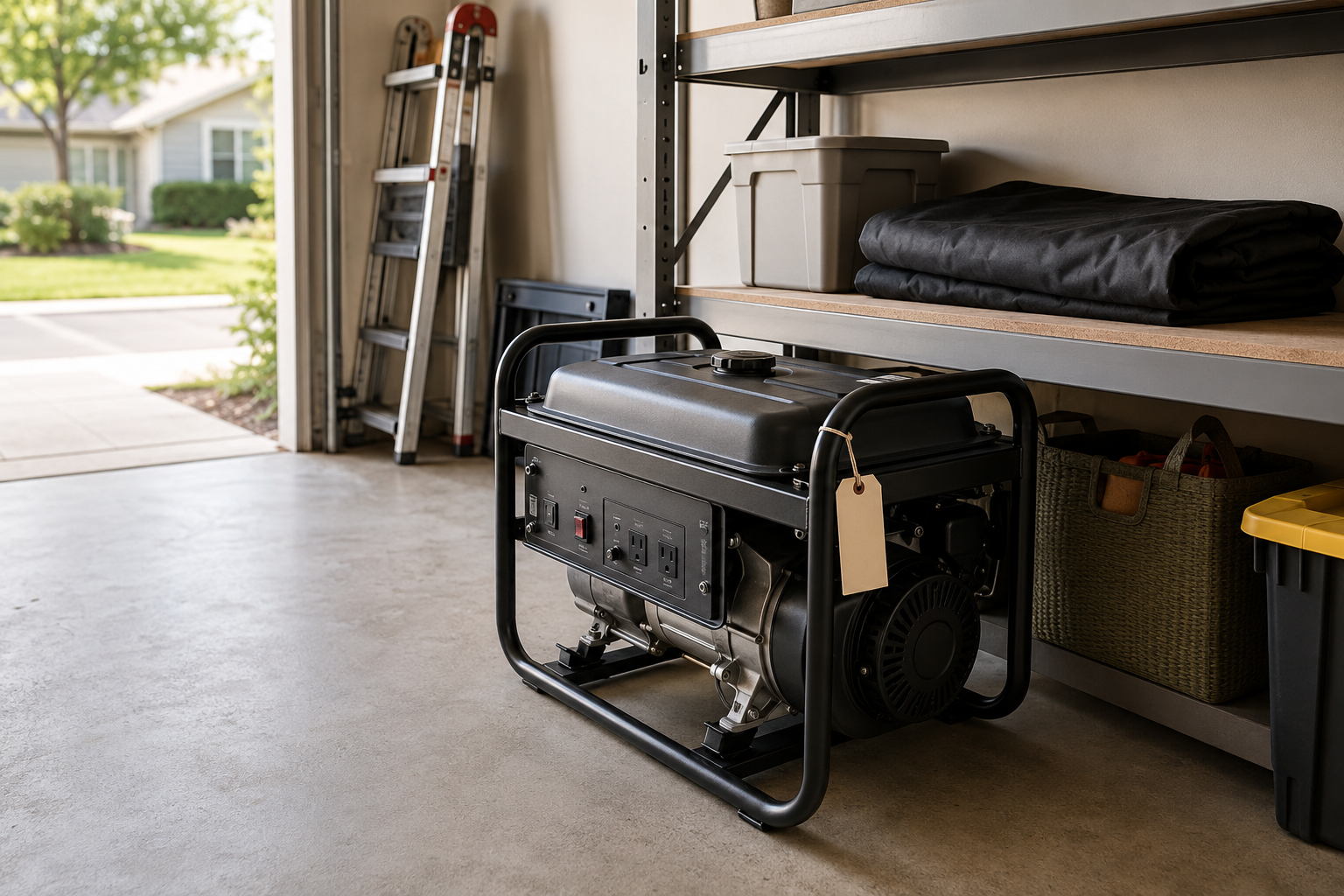
The power comes back on, the refrigerator is humming again and the last thing most people want to do is spend another half hour thinking about the generator.
It is tempting to shut it off, roll it into the corner of the garage and deal with it later.
That hurried last step can determine whether the generator starts the next time you need it.
Proper storage is not complicated, but it does require a decision about the fuel, a few checks after use and a safe place for the generator and its fuel. The exact procedure depends on your generator, how it is fueled and how long it will sit.
The Short Answer
To store a portable generator correctly:
- Disconnect the electrical loads and follow the manufacturer’s shutdown procedure.
- Let the generator cool completely.
- Prepare the fuel system for the expected storage time using the method in the owner’s manual.
- Complete any maintenance that became due during the outage.
- Charge, disconnect or remove the starting battery if the manual requires it.
- Store the generator upright in a cool, dry, protected location.
- Store gasoline containers and propane cylinders separately under their own safety rules.
- Record what you did and when the generator should be checked again.
The most important rule is simple: use the storage section of the owner’s manual for your exact model. There is no universal number of days after which every generator should be drained, and there is no single fuel-storage method that is correct for every machine.
Start With a Proper Shutdown
Storage begins before the generator is moved.
Turn off or disconnect the electrical loads in the sequence specified by the manufacturer. Some generators should run briefly without a load before shutdown; others provide a different cooldown sequence. Then stop the engine and close the fuel valve, fuel-cap vent or other controls as directed.
Do not refuel, drain, move or cover the generator while the engine or muffler is hot. Let it cool completely first.
This is also a good time to look for anything that changed during use:
- Fuel or oil leaks
- Damaged cords, plugs or receptacles
- Loose fasteners or panels
- Unusual vibration, smoke or noise
- A warning light or fault that needs attention
Do not put away a leaking or damaged generator with a promise to remember it later. Tag the problem and arrange the repair while you still know what happened.
Decide What to Do With the Gasoline
Gasoline causes many storage problems because it begins changing as soon as it is purchased. Heat, humidity, air in a partly filled tank and time can speed deterioration. Old fuel can make an engine hard to start and leave deposits in the carburetor’s small passages.
You will usually find one of two approaches in a portable generator manual.
Method 1: Store With Fresh, Treated Fuel
Some manufacturers permit gasoline to remain in the tank for a defined period when the fuel is fresh and the correct stabilizer is added.
If your manual specifies this method:
- Begin with fresh gasoline that meets the generator’s fuel requirements.
- Add the amount and type of stabilizer directed by the generator and stabilizer manufacturers.
- Run the generator outdoors long enough for treated fuel to reach the fuel system.
- Follow the manual’s instructions for the fuel valve, carburetor and tank.
- Mark the date and the end of the permitted storage period.
Fuel stabilizer can slow deterioration. It cannot restore stale gasoline, and it does not make fuel last forever.
Method 2: Store With the Fuel System Dry
Other manuals direct the owner to remove gasoline from the tank, carburetor or both after a certain storage period. The procedure may involve draining through a designated point, closing the fuel valve and running the carburetor dry, or a combination of steps.
Do not assume that letting the engine stop from fuel starvation empties every part of every carburetor. If the manual also calls for draining the carburetor bowl, follow that step.
Drain or transfer gasoline only outdoors, after the engine has cooled, into an approved fuel container. Keep flames, sparks, cigarettes and other ignition sources away. If gasoline is no longer usable, contact your local household hazardous-waste program instead of pouring it onto the ground or into a drain.
Why We Are Not Giving You One Storage Deadline
The manufacturers do not agree on one.
Honda explains that gasoline can deteriorate enough to cause problems in less than 30 days under some conditions and directs owners to the storage instructions for their specific model.
Generac recommends draining the tank and running the carburetor dry for many portable generators expected to sit longer than 30 days.
Champion’s general guidance allows properly stabilized gasoline in the tank for a longer period under stated conditions, while warning that gasoline left in the carburetor can create trouble much sooner.
Those differences are why advice from a neighbor, a video or another generator owner may be wrong for your machine. Find the model number, locate the correct manual and use its time period and procedure.
Safety First
Any step that requires the engine to run must be done outdoors in the generator’s safe operating location—not in the garage or shed where it will be stored. Operate it at least 20 feet from the home with the exhaust directed away from doors, windows and vents.
Handle or drain gasoline outdoors only after the generator has cooled. Use an approved container, control spills and keep all ignition sources away. Never use the storage area as a convenient place for a “quick” test run.
Review our portable generator safety guide before operating or servicing the generator.
Check the Maintenance Hours Before You Put It Away
A long outage can add more operating hours than several years of occasional testing.
Check the hour meter and the maintenance table in the manual. If an oil change, air-filter service, spark-plug inspection or other scheduled work is due, completing it before storage leaves the generator ready for the next outage.
Do not add maintenance steps simply because they appear on a generic checklist. Some manufacturers call for putting a small amount of oil into the cylinder before extended storage; others do not. Procedures and service intervals belong to the exact engine and generator.
Record the operating hours and the work completed. A strip of masking tape on the handle is better than relying on memory, but a simple maintenance log is better still.
Do Not Forget the Starting Battery
If the generator has electric start, the battery needs its own storage plan.
The manual may direct you to disconnect it, remove it, recharge it periodically or connect an approved maintainer. A short generator run may not fully recharge a battery that was heavily discharged during storage.
Inspect the terminals for looseness or corrosion and follow the manufacturer’s temperature and charging instructions. If the generator also has a recoil starter, make sure you know how to use it—but do not treat that as a reason to neglect the battery.
Choose the Storage Location Carefully
Store the cooled generator upright in a dry, cool and protected location. Keep it away from standing water, direct sunlight, corrosive chemicals, pilot lights, sparks and other ignition sources.
A fitted cover can keep off dust, but the generator must be completely cool first. Avoid trapping moisture against the machine, and do not block the area in a way that makes later inspection difficult.
Watch for rodents and insects. Nests in an air inlet, control compartment or exhaust area can create a problem that was not there when the generator was stored.
The right storage location is not automatically the right operating location. A garage or shed may protect a cooled generator, but a fuel-burning generator must never be run there—even with the door open.
Store the Fuel Separately and Safely
The generator and the spare fuel do not have identical storage rules.
The U.S. Consumer Product Safety Commission says portable fuel containers should be kept closed in a cool, well-ventilated area and never stored inside a house, basement or near ignition sources such as pilot lights, heaters or open flames.
Use approved, properly labeled containers and keep them out of reach of children. Check local fire-code limits before deciding how much gasoline to store or where to keep it.
Date each container. Rotate the fuel within the period allowed by the fuel and stabilizer manufacturers rather than assuming that a full can is ready simply because it has never been opened.
What About Propane and Dual-Fuel Generators?
Propane avoids some of gasoline’s carburetor problems, but the cylinder has its own fire and leak hazards.
Close the cylinder valve when it is not in use and disconnect it when the generator manual directs. Keep portable cylinders outdoors, upright and secured so they cannot fall, shift or roll. The Propane Education & Research Council advises against storing even an apparently empty portable cylinder in an enclosed area such as a house, basement, garage or shed.
Keep cylinders away from ignition sources and added heat, and follow local rules and the cylinder supplier’s instructions.
If you used gasoline in a dual-fuel generator, the gasoline side still needs the storage procedure specified in the manual. Switching the selector to propane does not remove gasoline left in the tank or carburetor.
Common Storage Mistakes
- Rolling the generator away while it is still hot
- Leaving untreated gasoline in the system without checking the manual
- Adding stabilizer to fuel that is already stale
- Assuming “run it dry” empties every carburetor
- Draining gasoline indoors or into an unapproved container
- Covering the generator before it cools
- Storing a propane cylinder in a garage, shed or basement
- Ignoring maintenance that became due during a long outage
- Letting the starting battery discharge for months
- Storing the generator where it cannot be inspected or removed easily
The Ready Chateau Generator Storage Checklist
Before you walk away, confirm that you have:
- Disconnected all loads and followed the correct shutdown sequence
- Allowed the generator to cool completely
- Checked for leaks, damage and maintenance due
- Prepared the gasoline system for the expected storage period
- Closed or positioned all controls as the manual directs
- Addressed the starting battery
- Stored the generator upright in a dry, protected location
- Stored gasoline containers or propane cylinders under their separate safety rules
- Recorded the operating hours, storage date and next test date
- Kept the manual, cords and essential accessories where they can be found
Before You Start It Again
Move the generator to its safe outdoor operating location before doing anything that could start the engine.
Inspect it for fuel or oil leaks, damaged hoses, corrosion, loose connections, debris and pest nests. Check the oil and battery. Add only fresh, approved fuel when required, then follow the manual’s return-to-service and starting procedure.
Test it while the weather is calm. Our guide to how often you should run your generator explains how to build that check into a regular readiness routine.
If the generator has already sat with old fuel and will not start, begin with our guide to why a generator may not start after sitting rather than repeatedly pulling the starter or adding more fuel.
Put It Away Ready, Not Merely Out of Sight
Generator storage is not about making room in the garage. It is about preserving a machine your household may need without warning.
Shut it down correctly. Let it cool. Follow the model-specific fuel procedure. Complete the maintenance that is due, protect the battery and store the generator and its fuel safely.
Then write down what you did.
The next outage should not begin with you wondering what was left in the tank the last time the lights came back on.